Spain’s Most Beautiful Airport Arrivals That Start Your Trip Right
First impressions matter.
And there’s nothing quite like pressing your face against a plane window as an entirely new landscape unfolds below you.
Most airports are functional at best—parking lots with runways.
But some Spanish airports offer arrivals so spectacular that the flight attendant’s “prepare for landing” announcement actually makes you excited instead of relieved.
From volcanic moonscapes to Mediterranean coastlines to mountain ranges that look photoshopped, these are the approaches that turn mere transportation into genuine experience.
1. Gibraltar: The Rock That Changes Everything
Technically a British Overseas Territory, but let’s be real—you’re looking at Spain the entire time you’re landing.
The approach to Gibraltar is unlike anything else in aviation.
The Rock looms impossibly large as your plane descends, its sheer limestone cliffs creating the kind of wind patterns and turbulence that keep pilots on their toes.
What makes it truly unique: the runway intersects with the main road into Spain.
Winston Churchill Avenue literally closes every time a plane lands or departs, with traffic barriers coming down like a railroad crossing.
From the air, you’ll spot cars waiting on either side while your plane touches down mere meters away.
The runway itself juts into the Bay of Gibraltar, giving you water on multiple sides and the Spanish coastline stretching toward Africa in the distance.
It’s equal parts terrifying and thrilling—a genuine only-in-Gibraltar experience before you’ve even unbuckled your seatbelt.
2. Lanzarote: Landing on Another Planet
The approach to Lanzarote’s César Manrique–Lanzarote Airport delivers the volcanic drama this island is famous for.
As your plane descends over the Atlantic, the island emerges like something from a science fiction film.
Black lava fields spread across the landscape, punctuated by clusters of blindingly white buildings and the occasional shock of green from vineyards dug into volcanic craters.
The airport sits near Arrecife on the southeastern coast, and the approach often takes you over the Timanfaya volcanic region—the same Fire Mountains that look like they erupted yesterday rather than in the 1730s.
César Manrique, the visionary artist who shaped so much of the island’s aesthetic, has influenced even the airport’s modern design.
When you step off the plane, that otherworldly feeling from the air continues—the landscape really does look like this, and you’ve got a whole island of volcanic weirdness to explore.
3. Bilbao: Where Mountains Meet Industry Meets Culture
Bilbao’s airport approach is a study in contrasts.
Your plane sweeps in over the Cantabrian Mountains, their green slopes dramatically different from the dry interior of Spain.
Then the estuary of the Nervión River appears below, with the city sprawling along its banks.
If you’re lucky with your seating, you might catch a glimpse of the Guggenheim Museum’s titanium curves—that building looks surreal from ground level, but from the air it’s even more obviously something dropped from another dimension.
The airport terminal itself was designed by Santiago Calatrava, with a roof that resembles a dove in flight.
It’s all sweeping white curves and glass, setting the aesthetic tone for a city that’s reinvented itself through architecture.
Landing here, you immediately understand that Bilbao takes design seriously—your trip has already begun before you hit baggage claim.
4. Tenerife South: Volcanic Drama and Ocean Blues
Tenerife South Airport serves the sunny side of Spain’s most-visited Canary Island, and the approach is a geological highlight reel.
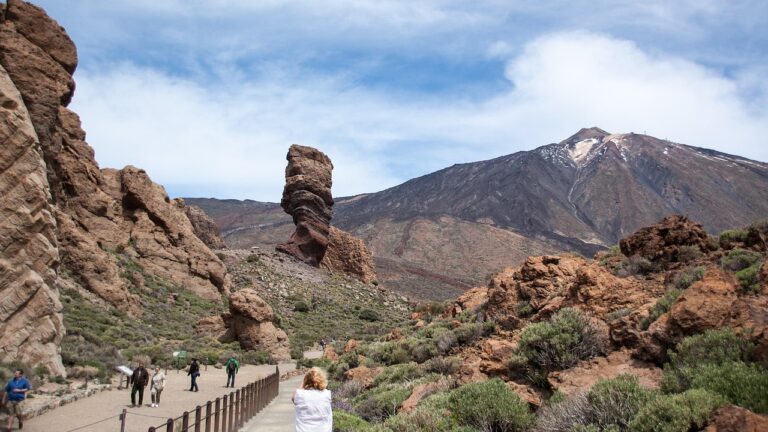
Depending on your flight path, you might catch views of Mount Teide—Spain’s highest peak at 3,718 meters—rising above the clouds like something from a fantasy novel.
The southern coastline unfolds in layers: black volcanic beaches, turquoise waters, resort towns clustered along the shore, and the barren volcanic interior stretching toward the central caldera.
What makes this arrival special is the contrast between the almost lunar landscape and the vivid blues of the Atlantic below.
The airport sits near popular resort areas like Los Cristianos and Playa de las Américas, so you’ll often see beaches and pools from the air, tiny tourists visible as colorful dots on the sand.
The landing itself is usually smooth (Tenerife South was built specifically to avoid the clouds and wind that plague the northern airport), giving you plenty of opportunity to gawk.
5. Palma de Mallorca: Mediterranean Postcard Perfection
Son Sant Joan Airport in Palma handles over 31 million passengers annually, making it one of Spain’s busiest.
But those numbers don’t diminish the visual spectacle of the approach.
Planes typically swing in from the sea, offering panoramic views of the Bay of Palma with the Serra de Tramuntana mountains rising to the northwest.
The cathedral and old town of Palma sit right on the waterfront, their honey-colored stone glowing in the Mediterranean light.
Depending on your angle, you might spot the sweeping arc of Palma’s harbor, dotted with yachts and fishing boats, with the city’s palm-lined promenades stretching along the shore.
The approach gives you a preview of the island’s greatest hits: clear turquoise waters, dramatic mountain ridges, and that particular golden quality that Mallorcan light seems to specialize in.
No wonder artists have been obsessed with this place for centuries—the appeal is obvious before you’ve even landed.
6. Málaga: Costa del Sol Gateway
Málaga-Costa del Sol Airport offers an approach that perfectly previews what awaits on the ground.
Coming in from the Mediterranean, you’ll fly over water so blue it looks artificial before the coastline comes into view.
The contrast between the deep blue sea and the dry, sun-baked mountains inland is striking—this is Andalusia, where everything is bathed in intense southern light.
You might spot the Alcazaba fortress and cathedral perched on the hill above the city, or the curve of La Malagueta beach where Picasso once played as a child.
The airport handles over 22 million passengers yearly, many headed to beach resorts along the coast, but the approach hints at the cultural depth waiting beyond the package holidays.
Mountains, beaches, ancient cities, and endless sunshine—Málaga delivers the Andalusian highlight reel from the moment you begin your descent.
7. Gran Canaria: A Continent in Miniature
Gran Canaria earns its nickname “miniature continent” honestly, and the approach to Gando Airport makes that case beautifully.
As your plane descends, you’ll see the extraordinary variety packed onto one volcanic island.
Towering peaks (Pico de las Nieves reaches nearly 2,000 meters), vast dune fields at Maspalomas, lush valleys in the interior, and dramatic coastal cliffs all compete for your attention.
The airport sits on the eastern coast, and approaches often circle the island to give passengers a sampler platter of landscapes.
The Canarian pines clinging to steep mountain ridges, the circular craters of ancient volcanoes, the harbor of Las Palmas with its container ships and ferries—it’s all visible from your window seat.
Landing here feels less like arriving at a Spanish island and more like touching down on a world that decided to include every ecosystem just to show off.