Spain’s Most Mesmerizing Moorish Architecture Still Standing Today
For nearly 800 years, Muslim rulers controlled large parts of what is now Spain.
They called it Al-Andalus. They built some of the most beautiful structures in European history.
When Christian kingdoms reconquered the peninsula, they could have destroyed everything. Instead, they kept it — sometimes converting mosques to churches, sometimes simply preserving what they recognized as irreplaceable.
That decision left Spain with the finest collection of Islamic architecture in Western Europe.
Here’s where to find it.
The Alhambra: The Red Castle
There’s a reason the Alhambra is one of the most visited monuments in Europe.
Perched above Granada, this 13th and 14th-century palace complex represents the pinnacle of Nasrid architecture — the last Muslim dynasty in Spain before the final Reconquista in 1492.
The Nasrid Palaces are the heart of the experience. The Court of the Lions, with its famous fountain supported by twelve marble lions, epitomizes the Nasrid aesthetic — water, light, and geometric decoration creating spaces that feel like poetry made physical.
Every surface carries ornament. Stucco walls are carved with Arabic inscriptions, geometric patterns, and stylized vegetation. Tile mosaics called zellij create complex patterns that seem to extend infinitely. Ceilings drip with muqarnas — honeycomb vaulting that fragments light into soft gradations.
The Alhambra influenced everything that came after. Washington Irving’s “Tales of the Alhambra” sparked 19th-century Orientalism. M.C. Escher studied the geometric patterns here before developing his famous tessellations.
Book tickets months in advance, especially for timed entry to the Nasrid Palaces. Evening visits offer a different experience — the spaces were designed to be enjoyed after dark, when oil lamps made the gilt and tilework glow.
The Mezquita of Córdoba: The Forest of Columns
Enter through the Patio de los Naranjos, and for a moment, you could be in any Spanish city.
Then step inside.
The Great Mosque of Córdoba stretches before you — 856 columns supporting horseshoe arches striped in red and white, creating a forest of stone that seems to extend forever.
Construction began in 784 AD under Abd al-Rahman I, who fled Damascus after his family’s overthrow and established an emirate in Spain. The mosque was expanded over centuries, eventually accommodating 40,000 worshippers.
After the Christian conquest in 1236, the mosque was converted to a cathedral. In the 16th century, a Gothic-Renaissance church was inserted into the center of the Islamic structure — a decision Emperor Charles V later regretted, reportedly telling the builders: “You have built what you or anyone might have built anywhere else, but you have destroyed what was unique in the world.”
The mihrab — the prayer niche indicating the direction of Mecca — remains the mosque’s masterpiece. Byzantine craftsmen sent by the Emperor of Constantinople decorated it with gold mosaics, creating a glittering alcove that rivals anything in Istanbul.
Real Alcázar of Seville: Christian Rulers, Muslim Craftsmen
The Real Alcázar is Mudéjar architecture at its finest — Islamic techniques and aesthetics applied by Muslim craftsmen for Christian rulers.
The palace began as a 10th-century Moorish fort. After the Christian conquest of Seville in 1248, kings continued to expand it, but they hired the same artisans who had built for their Muslim predecessors.
The Palace of Pedro I, built in the 14th century, is the highlight. Arabic inscriptions praise the Christian king in Islamic calligraphic styles. Tilework and stucco indistinguishable from the Alhambra decorate rooms designed for a medieval Spanish monarch.
Game of Thrones fans will recognize the gardens as the Water Gardens of Dorne.
The Spanish Royal Family still uses the upper floors when visiting Seville — making this the oldest royal residence still in use in Europe.
The Giralda: From Minaret to Bell Tower
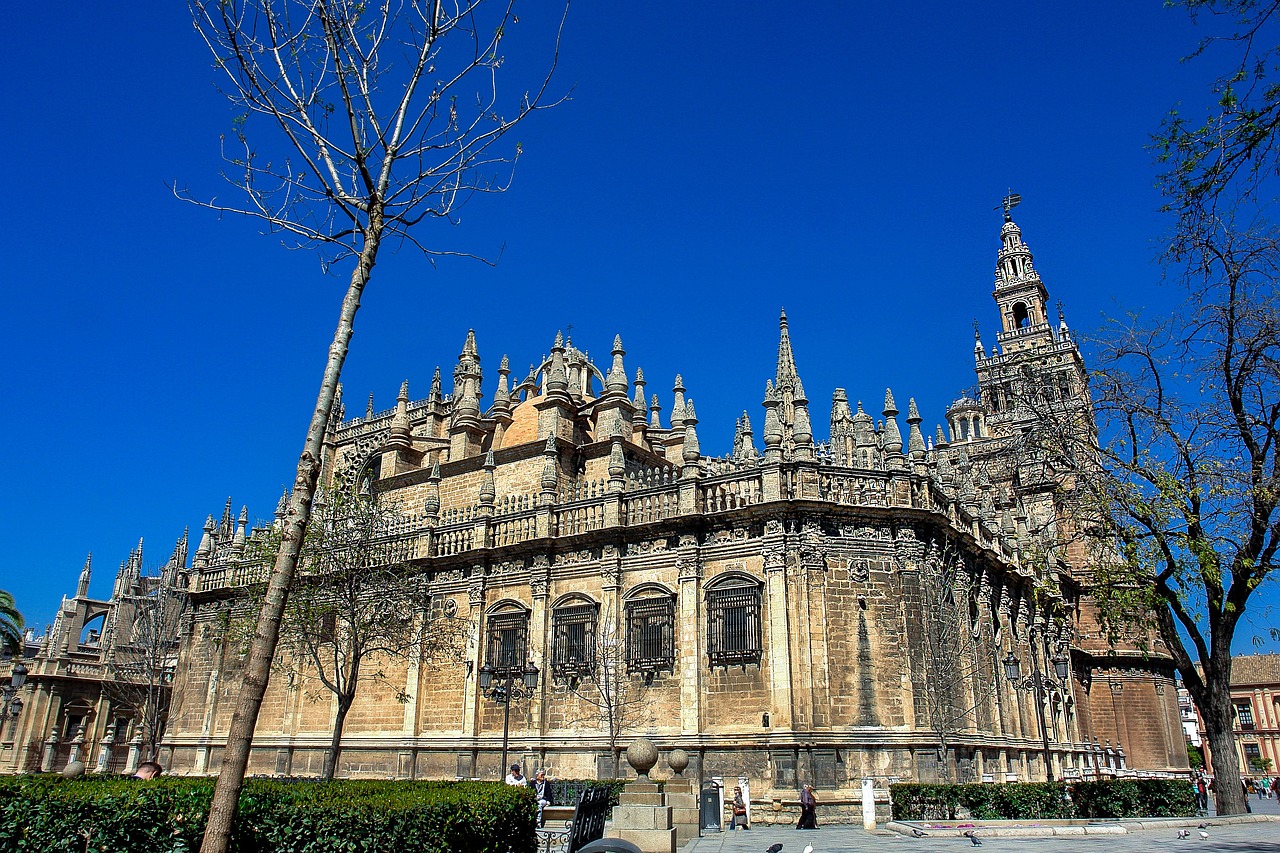
Seville’s most recognizable landmark started as a mosque’s minaret.
Built in the 12th century under the Almohad dynasty, the Giralda originally stood 76 meters tall, topped with four gilded spheres that could be seen from miles away.
After the Christian conquest, the spheres were replaced with bells and a Renaissance belfry was added, bringing the total height to 104 meters. But the lower section remains purely Almohad — geometric brick patterns called sebka creating a textured surface that plays beautifully with light.
The interior has ramps instead of stairs — the muezzin reportedly rode a horse to the top to call prayers. You can walk up today for panoramic views of Seville.
Medina Azahara: The Lost City
Ten minutes from Córdoba lie the ruins of what was once the most magnificent palace in the Western world.
Abd al-Rahman III began building Medina Azahara in 936 AD as his new administrative capital. For 74 years, it functioned as the seat of the Caliphate of Córdoba — a complex so lavish that legends described mercury pools that reflected sunlight throughout the halls.
Then civil war destroyed it. The city was sacked in 1010 and left to decay for nearly a millennium.
Today, only about 10% has been excavated. But what’s been uncovered — the Salón Rico with its exquisite carved panels, the gardens, the mosque — hints at lost grandeur.
Medina Azahara received UNESCO World Heritage status in 2018, bringing new attention and resources to ongoing excavations. Visit now, and you’ll see a site still revealing its secrets.
Aljafería Palace: Moorish Architecture Outside Andalusia
Not all of Spain’s Islamic heritage is in the south.
The Aljafería in Zaragoza proves that Muslim rulers created masterpieces across the peninsula. Built in the 11th century by the Taifa rulers of Zaragoza, it’s the only surviving major example of Hispano-Islamic architecture from the Taifa period.
The courtyard with its interlaced arches demonstrates that Islamic aesthetics flourished far beyond Córdoba and Granada. After the Christian conquest, Aragonese kings made it their residence, adding Gothic elements that blend surprisingly well with the Islamic structure.
Today it houses the Aragonese parliament, but most areas remain open to visitors.
The Alcazaba of Málaga: The Fortress Above the Sea
Perched on a hill overlooking Málaga’s harbor, this 11th-century fortress offers both military architecture and palace refinement.
The Alcazaba’s outer walls and towers demonstrate defensive Moorish engineering. But inside, gardens, fountains, and delicate arches create the contemplative atmosphere typical of Islamic palaces.
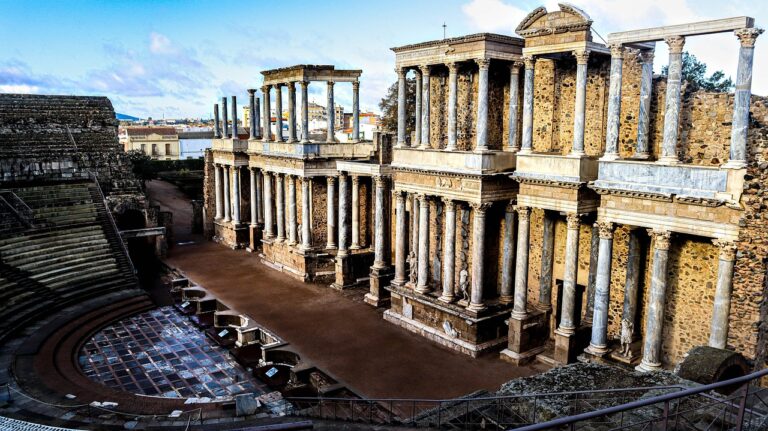
A Roman theater lies at the foot of the fortress — the Muslims repurposed its stones for construction. The layers of history literally stack atop each other.
From the ramparts, views extend across the Mediterranean. You can see why the Moors chose this site.
Baños Árabes: The Hammams
Throughout Spain, Arab bathhouses survive — some converted to museums, others still functioning.
The Baños Árabes of Jaén are among the best preserved in Spain, with star-shaped skylights piercing vaulted ceilings. Ronda’s Arab Baths sit beside the famous gorge. Granada offers several restored hammams where you can actually bathe, experiencing something like what medieval residents knew.
These smaller structures show how Islamic culture shaped daily life, not just royal spaces. Bathing was ritual, social, and architectural — the buildings designed to create specific experiences of light, steam, and water.
Understanding Mudéjar: The Hybrid Style
After the Reconquista, Islamic craftsmen remained in Spain. Christian rulers hired them to build in styles they couldn’t replicate themselves.
The result was Mudéjar — Islamic techniques applied to Christian buildings.
Churches with geometric brick towers. Palaces with tilework and stucco. Ceilings with intricate wooden coffering called artesonado.
Mudéjar architecture appears throughout Spain — in Teruel, Zaragoza, Toledo, and dozens of smaller towns. It’s been called Spain’s most distinctive architectural contribution, the style that emerged from coexistence.
UNESCO has designated multiple Mudéjar sites as World Heritage, recognizing a tradition that existed nowhere else.
Why This Architecture Matters
Islamic architecture in Spain isn’t just beautiful — it’s evidence.
Evidence of nearly eight centuries of Muslim presence on European soil. Evidence of artistic traditions that influenced everything from the Alhambra-inspired architecture in 19th-century America to Gaudí’s geometric tiles in Barcelona.
Evidence, too, of destruction — of the libraries burned, the mosques demolished, the knowledge lost when the Reconquista ended in 1492.
What survives does so because conquerors recognized value in what they’d conquered. They couldn’t build anything comparable, so they kept it.
That ambivalence runs through every surviving structure. Christian alterations interrupt Islamic spaces. Cathedrals occupy former mosques. Minarets become bell towers.
But the beauty persists.
The geometric patterns still hypnotize. The courtyards still quiet the mind. The light still falls through star-shaped openings the way it has for a thousand years.
That persistence is its own kind of testimony — to the skill of the builders, to the power of beauty, to what survives when civilizations clash.