Spain’s Most Jaw-Droppingly Painted Villages You’ve Never Heard Of
Spain has a ghost town problem.
Young people leave for the cities.
Villages that once thrived slowly empty out.
Buildings crumble. Schools close. The end feels inevitable.
But some communities found a wildly creative solution: invite artists from around the world to paint every surface in sight.
The result? Villages so colorful, so photogenic, and so utterly unexpected that tourists now travel hours just to wander their streets.
Here are the painted villages that prove a little color can save a dying town.
Romangordo: The Village of Optical Illusions
Population: about 300.
Location: middle of nowhere, Extremadura.
Claim to fame: trompe-l’œil murals that will genuinely mess with your brain.
Romangordo didn’t just get painted — it got transformed into a giant optical illusion.
The murals here use the trampantojo technique (trompe-l’œil in French) to create scenes so realistic you’ll do a double-take.
A soda delivery truck that isn’t there.
Children playing in a street that’s actually a blank wall.
A donkey standing in a doorway that doesn’t exist.
The project started in 2015 when locals decided to cover damaged facades with something more interesting than repairs.
Now the murals depict life as it used to be in the village — traditional trades, summer holidays when emigrant sons returned home, local wildlife like the Iberian lynx.
It’s equal parts art gallery and history lesson.
Walking through Romangordo creates a strange sense of time travel, like the past is literally painted onto the present.
Fanzara: The Village Street Art Saved
Fanzara is the poster child for Spain’s street art village movement.
In 2014, this tiny town in Castellón province was dying.
Around 300 residents remained, most of them elderly.
The future looked grim.
Then locals launched MIAU (Museo Inacabado de Arte Urbano — the Unfinished Museum of Urban Art) and invited graffiti artists from around the world to transform the village.
The plan worked spectacularly.
Today Fanzara is covered in murals — on homes, barns, walls, anywhere paint can stick.
The styles range from photorealistic portraits to abstract explosions of color.
New works appear regularly, so the “unfinished museum” keeps evolving.
Tourism has brought life back to the village.
Restaurants have reopened. Visitors wander the streets with cameras. The community has a future again.
It’s an hour from Valencia and makes a perfect day trip combined with exploring the surrounding Castellón countryside.
Penelles: Catalonia’s Quiet Art Revolution
Penelles sits just off the C-53 highway between Tàrrega and Balaguer in Lleida province.
Most travelers zoom right past.
That’s their loss.
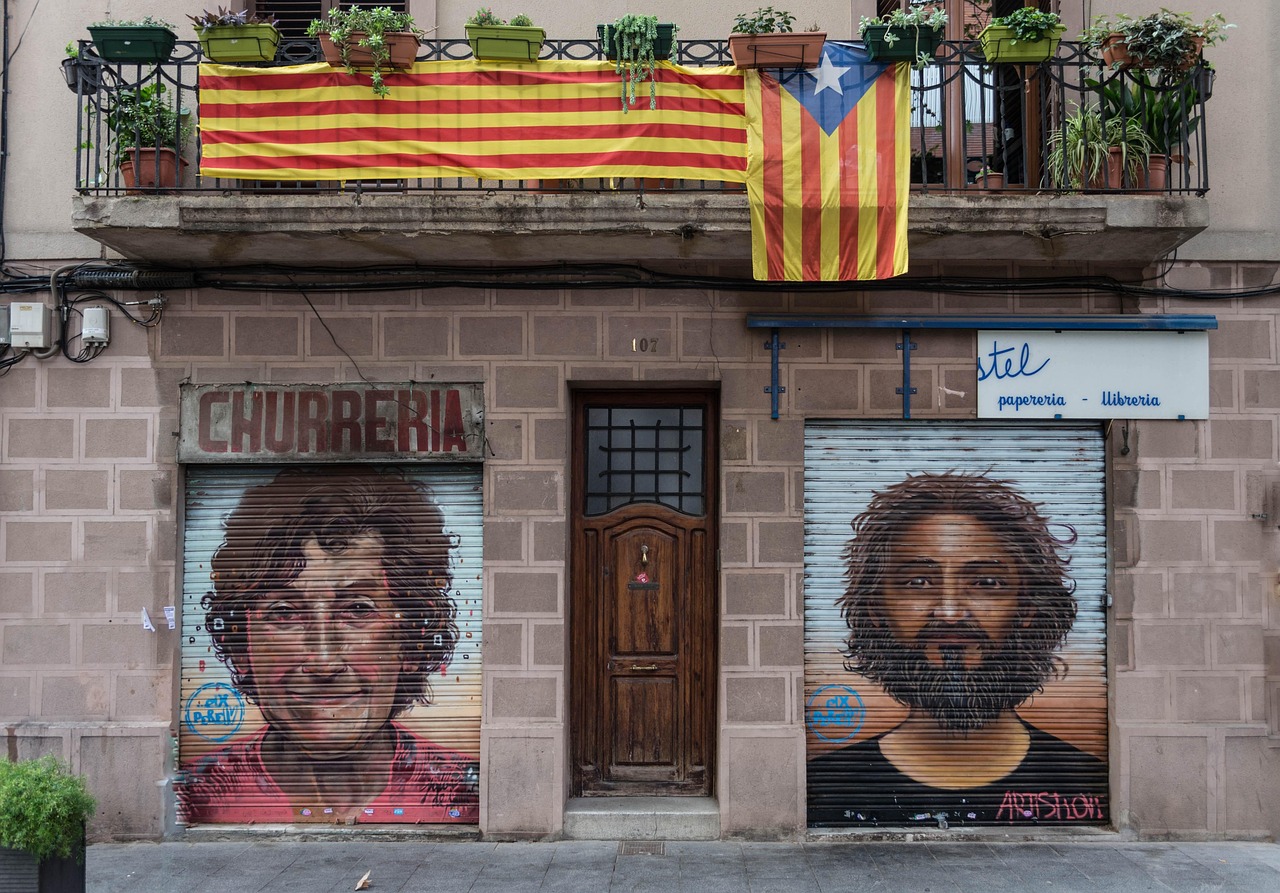
This tiny Catalan village has quietly accumulated one of Spain’s most impressive street art collections.
The local tourist office provides maps, but honestly, most murals are now marked on Google Maps — incredibly helpful since the office keeps limited hours.
What sets Penelles apart is the quality and variety of work.
Some murals are massive, covering entire building facades.
Others are more intimate, tucked into corners and alleyways.
The subject matter ranges from local agricultural life to fantastical scenes that look straight out of dreams.
Unlike more famous destinations, you’ll likely have these streets entirely to yourself — perfect for uninterrupted photography and genuine exploration.
Pair it with a weekend in Lleida or a Pyrenees road trip.
Alfamén: Zaragoza’s Best-Kept Secret
In 2017, the small village of Alfamén near Zaragoza hosted Festival Asalto, one of Spain’s most prestigious street art events.
The festival was a massive success.
Since 2019, the village has maintained a permanent collection of street art that rivals any in the country.
Many murals feature QR codes that let you learn about each artist directly from your phone.
There’s no tourist office (yet), but maps are available in Zaragoza, and Google Maps covers most locations.
Alfamén sits along the Madrid-Barcelona route, making it an easy stop on any road trip between the two cities.
Combine it with a weekend in Zaragoza or a visit to the stunning medieval village of Albarracín.
La Muralla Roja: Not a Village, But Absolutely Insane
Okay, this one’s technically an apartment building.
But hear me out — La Muralla Roja in Calpe might be the most photogenic structure in all of Spain.
Designed by architect Ricardo Bofill in 1968 and built in 1973, it’s a constructivist fever dream inspired by North African kasbahs.
The exterior features shifting shades of red that contrast dramatically with the Mediterranean coastline.
Inside, patios and stairways are painted in light blue, indigo, and violet to blend with the sky.
The building is divided into four color-coded zones: pink, red, blue, and purple.
It’s a genuine maze — getting from one area to another requires navigating endless stairs and corridors.
The only way to visit is by renting one of the apartments on Airbnb.
During high season, prices hit €150/night or more.
Off-season rates drop to around €55/night — still worth it for the most Wes Anderson-looking place you’ll ever stay.
Fair warning: drones are banned, elevators rarely work, and security guards will call the police if you enter without being a guest.
Villangómez: Population 200, Murals Everywhere
In Burgos province, the tiny village of Villangómez has embraced street art with titles that read like poetry.
“Sounds of an Absent River.”
“Flying from the Root.”
With only about 200 inhabitants, the murals here feel especially personal — tributes to local traditions, agricultural life, and the landscape that shaped the community.
It’s far off the typical tourist trail, which is exactly the point.
Combine it with exploration of northern Castile and León for a road trip most travelers will never experience.
The Painted Silos of Castile-La Mancha
Here’s a bonus trend that’s sweeping rural Spain.
Abandoned grain silos — the tall cylindrical structures where wheat was once stored — are being transformed into massive street art canvases.
Many have also been converted into viewpoints, with staircases installed so visitors can climb to the top.
The silo in Almagro offers one of the best examples: spectacular murals plus panoramic views of the La Mancha countryside.
It’s a perfect symbol of rural Spain’s reinvention — taking something obsolete and making it beautiful again.
How to Plan Your Painted Village Adventure
Five Spanish villages have officially declared themselves “open-air museums”: Fanzara, Penelles, Alfamén, Romangordo, and Villangómez.
None charge admission.
All are accessible by car (public transport is limited to nonexistent).
Download offline maps before you go — cell service is spotty in rural areas.
Weekdays offer more solitude; weekends bring the occasional tour bus.
Bring water and snacks — restaurant options are limited in villages this small.
And prepare your camera storage, because you’re about to take more photos than you thought possible.
These villages aren’t just worth visiting.
They’re proof that creativity can save communities — one painted wall at a time.