
Barcelona Is Overrated. These 10 Spanish Small Towns Are the Real Deal
Barcelona is incredible.
Madrid is world-class.
But Spain’s big cities represent maybe 5% of what makes this country genuinely special.
The real magic happens in small towns where cobblestone streets echo with centuries of history, where elderly neighbors still chat from balcony to balcony, and where you might be the only tourist for miles.
These are places where local festivals haven’t been invented for Instagram, where restaurants still serve grandmother’s recipes, and where “rush hour” means two tractors passing on a narrow lane.
Some cling to mountainsides, others cascade toward the sea, and each offers something you simply cannot find in guidebook-famous destinations.
Prepare to revise your itinerary, because these charming Spanish small towns are about to become your new travel obsession.
Quick Picks: Find Your Perfect Small Town
🌈 For colorful fishing village vibes: Cudillero — rainbow houses tumbling toward an Asturian harbor
🏰 For medieval time travel: Aínsa or Besalú — stone squares and castle ruins in the Pyrenean foothills
🎨 For artistic inspiration: Cadaqués — Dalí’s muse on the Costa Brava
🥾 For hikers: Potes — gateway to the dramatic Picos de Europa
🏖️ For beach + history combo: Peñíscola — medieval castle rising from the Mediterranean
🦑 For seafood lovers: Combarro — Galician granaries, octopus, and Albariño wine
1. Cudillero – The Rainbow Fishing Village

On Asturias’s northern Atlantic coast, Cudillero’s colorful houses cling to steep cliffs like a vertical rainbow cascading toward the harbor below.
Once a small fishing village, it now attracts visitors who want beach access and great seafood without Costa del Sol crowds.
To explore Cudillero’s many charms, follow the blue fish painted onto the narrow winding streets — a self-guided tour that reveals hidden corners and panoramic viewpoints.
The Garita viewpoint offers the iconic photograph: the entire village stacked vertically with fishing boats bobbing below.
This is sidra (cider) country, and sitting outside with a glass paired with Asturian cheese while watching fishermen bring in the daily catch is about as perfect as life gets.
The overlook of Cabo Vidio and the beach called Playa del Silencio are nearby, making Cudillero an excellent base for exploring Asturias’s spectacular coastline.
Despite growing popularity, there aren’t heaps of activities to do in Cudillero — and that’s entirely the point.
For more off-the-beaten-path Spanish coastline, check out our guide to Spain’s most secret beaches.
Pro tip: Visit in the evening when day-trippers leave and the village glows golden in the sunset light.
2. Aínsa – Medieval Magic in the Pyrenean Shadows

In the shadow of the Pyrenees Mountains, the medieval town of Aínsa preserves its ancient character so completely that you’ll forget what century you’re in.
The Plaza de San Salvador, one of Spain’s most beautiful medieval squares, is anchored by Aínsa Castle at one end — parts dating from the 11th century, though much comes from the 16th.
Two castle towers have been transformed into museums: the Ecomuseo, where you learn about the Pyrenees ecosystem, and the Espacio del Geoparque de Sobrarbe.
Stone arches, arcaded walkways, and remarkably preserved medieval architecture create an atmosphere of genuine timelessness.
The town serves as a gateway to outdoor adventures, with hiking, canyoning, and wildlife watching accessible in the surrounding mountains.
Aínsa’s proximity to some of Spain’s most dramatic natural scenery makes it perfect for travelers who want cultural heritage and outdoor activity in one destination.
Come during one of the town’s medieval festivals to see locals in period costume reenacting scenes from centuries past.
If you love this medieval atmosphere, you’ll want to explore our full guide to 14 medieval villages in Spain.
Pro tip: The nearby Ordesa y Monte Perdido National Park is one of Spain’s most spectacular — plan a hiking day from Aínsa.
3. Combarro – The Village of Granaries

In Galicia’s lush Rías Baixas region, Combarro preserves more than 60 traditional hórreos — stone granaries raised on stilts — along its waterfront.
These distinctive structures, used for centuries to store grain above damp ground, create a silhouette unlike any other village in Spain.
Traditional Galician stone houses line narrow streets leading to a picturesque harbor where fishing boats still bring in the daily catch.
Cruceiros (granite crosses) appear throughout the village — Galicia is home to around 12,000 of these, each representing “pardons from heaven.”
Seafood here is exceptional: shellfish and pulpo gallego (Galician-style octopus with paprika) paired with local Albariño wine approach religious experience.
The scenic fishing port, stone houses, and proximity to wine country make Combarro one of those places where you can wander, soak in local life, and forget the world exists.
Unlike more famous Galician destinations, Combarro maintains authentic atmosphere without tourist-oriented developments overwhelming its character.
If you’re exploring Galicia, consider walking part of the Camino — see our beginner’s guide to the Camino de Santiago.
Pro tip: Visit the nearby Rías Baixas wineries for Albariño tastings — this is one of Spain’s most underrated wine regions.
4. Santillana del Mar – The Town of Three Lies

Locals joke that Santillana del Mar is the “town of three lies” because it’s neither holy (santi), flat (llana), nor by the sea (del Mar).
What it actually is: a beautifully preserved medieval town where cobbled streets and historic buildings have remained largely unchanged for centuries.
History piles up extraordinarily here — prehistoric artists left jaw-dropping cave paintings at nearby Altamira, Romans passed through, Asturian kings built, monks prayed, and nobles constructed palaces.
Medieval towers and grand mansions line streets where coats of arms still watch over doorways as they have for 500 years.
The Colegiata de Santa Juliana, Santillana’s anchor, is one of the most important Romanesque monuments in all of Cantabria.
Unfortunately, the famous Altamira caves limit visitors to 260 per year to protect 36,000-year-old paintings, but the local museum houses an impressive reproduction called “Neocueva de Altamira.”
Santillana is essentially a living museum where medieval structures house contemporary life — restaurants, shops, and hotels occupy buildings older than most countries.
Pro tip: Stay overnight — the day-trippers leave by evening, and the medieval streets become hauntingly atmospheric after dark.
Book Altamira Museum tickets →
Find hotels in Santillana del Mar →
5. Cadaqués – The Artist’s Mediterranean Muse
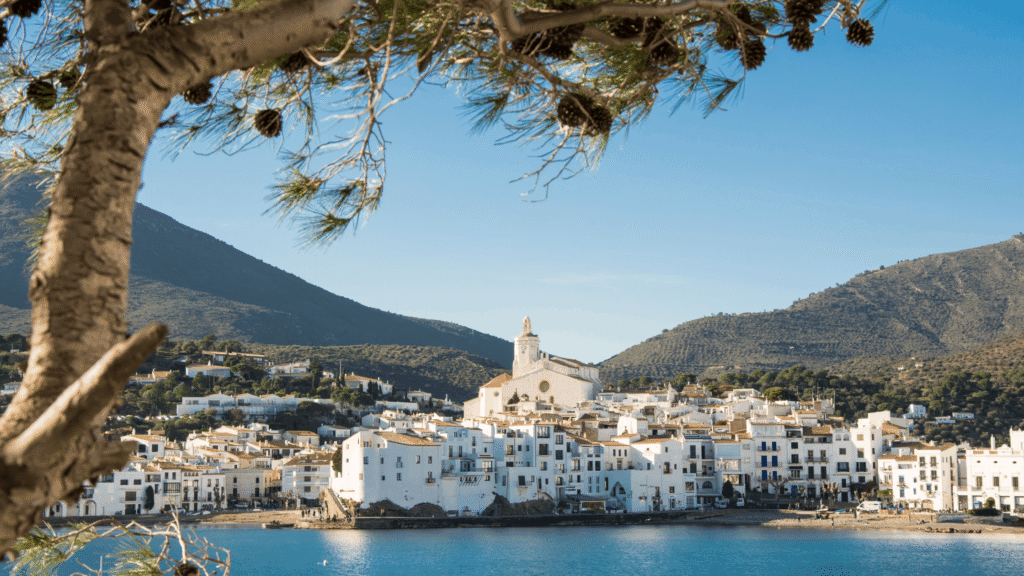
Salvador Dalí made Cadaqués famous, and walking through its whitewashed streets, past its gorgeous beach and blue Mediterranean waters, you immediately understand why.
This small Catalan town on the Costa Brava maintains the charm that attracted artists and bohemians for generations.
Tiled walkways lead between charming seafood restaurants and local boutiques, while fishing boats bob in a harbor that could have been painted by any of the masters who worked here.
Dalí’s house at nearby Port Lligat is now a museum requiring advance reservation — book early, as tickets sell out weeks ahead.
The town’s relative isolation (reached via winding mountain roads) has protected it from overdevelopment that transformed other Costa Brava villages.
Art galleries, Mediterranean cuisine, and that particular quality of light that artists have always sought combine into something genuinely magical.
Summer brings crowds, but off-season Cadaqués reveals its true personality — quiet, creative, and utterly captivating.
If you’re exploring Catalonia, combine Cadaqués with our 14 must-visit spots in Barcelona.
Pro tip: The winding road in is dramatic but worth it — don’t rush, and stop at the viewpoints along the way.
Book Dalí House Museum tickets →
6. Potes – Gateway to the Picos de Europa

Tucked away in Cantabria at the entrance to Picos de Europa National Park, Potes strikes the ideal balance between history, food, and the great outdoors.
Stone bridges span the rivers that meet here, while charming alleys wind between buildings that have served travelers for centuries.
The town’s connection to nature is immediate — mountain peaks are visible from its streets, and trailheads lie just minutes away.
Traditional cuisine features heavily, with cocido lebaniego (a hearty chickpea stew) being the signature dish you shouldn’t leave without trying.
Orujo, a local grape spirit, is produced in surrounding villages and available throughout Potes for those seeking liquid souvenirs.
The weekly market brings the countryside into town, with local producers selling cheese, honey, and cured meats that reflect the mountain terroir.
For anyone who wants quaint village atmosphere with immediate access to serious hiking, Potes is essentially perfect.
The Picos de Europa feature some of Spain’s most jaw-dropping canyons — don’t miss the Cares Gorge hike.
Pro tip: The Fuente Dé cable car, 25 minutes from Potes, whisks you up 750 meters for incredible mountain views and high-altitude hiking.
7. Lastres – The Terraced Fishing Village

Perched on terraced streets cascading down to a small fishing port, Lastres is one of Asturias’s most picturesque coastal villages.
The uphill streets will give your legs a workout, but the reward appears at various viewpoints: stunning vistas where sparkling waters meet lush green mountains.
This is fabada country — the hearty Asturian bean stew that provides fuel for all that climbing.
Unlike more accessible coastal towns, Lastres maintains an authentic fishing village atmosphere where the daily catch still matters more than tourism.
Traditional architecture, stone houses painted in soft colors, and a pace of life that hasn’t accelerated with the modern world create deep charm.
The Mirador de San Roque provides the classic viewpoint photograph, capturing the village’s vertical arrangement against the Cantabrian Sea.
Combining Lastres with nearby Cudillero and the Asturian interior creates one of Spain’s most rewarding road trips.
Pro tip: Time your visit to watch the fishing boats return in the late afternoon — the port comes alive as the catch is unloaded.
8. Guadalest – The Cliff-Top Marvel

Accessed through a tunnel carved from rock called the Portal de San Jose, Guadalest in Alicante province delivers drama from the moment you enter.
This charming village with fewer than 200 inhabitants sits dramatically on a cliff above the Guadalest Reservoir.
Despite — or perhaps because of — its tiny size and spectacular location, Guadalest has become popular with day-trippers from Benidorm, so timing your visit matters.
Castle ruins crown the summit, while whitewashed houses with red-tiled roofs cascade down the cliff face below.
Multiple small museums pack an unusual amount of culture into such a compact space.
The views over the turquoise reservoir and surrounding mountains are genuinely spectacular, justifying the village’s postcard-perfect reputation.
Arrive early or late to experience Guadalest without the tour bus crowds that can overwhelm its narrow streets midday.
For more dramatic Spanish landscapes, explore our guide to 10 epic places in Spain.
Pro tip: The kayaking and paddleboarding on the reservoir below offer a different perspective on the cliff-top village — and a refreshing break from summer heat.
Book Guadalest day trip from Alicante →
9. Besalú – The Bridge to Medieval Catalonia

Besalú’s spectacular fortified Romanesque bridge, complete with crenellated battlements, provides one of Spain’s most recognizable medieval images.
The 12th-century structure spans the River Fluvià, and crossing it genuinely feels like passing through a portal into another era.
Beyond the bridge, photogenic cobblestone streets and ancient stone buildings create one of Catalonia’s best-preserved medieval centers.
The town’s Jewish heritage remains visible in rare medieval baths discovered in the 1960s, offering insight into the community that once thrived here.
Sant Vicenç, a 10th-century Romanesque church with a particularly beautiful rose window, rewards architectural exploration.
The Besalú Medieval Festival, held on the last weekend of August, transforms the town into a living medieval celebration.
Being easily accessible from Girona or Barcelona makes Besalú perfect for day trips, though staying overnight reveals the town’s quieter magic.
Besalú pairs beautifully with a trip to the coast — check out Barcelona’s hidden cafes for your city portion.
Pro tip: Walk across the bridge at sunset when the golden light hits the stone and the crowds have thinned.
Book Besalú day trip from Barcelona →
10. Peñíscola – The Medieval Town by the Sea

Rising from the Mediterranean on a rocky headland, Peñíscola’s medieval castle and walls create one of Valencia’s most striking coastal silhouettes.
Pope Benedict XIII, the final Avignon Pope, lived here in the early 15th century, and his castle — often called the “Castle of the Pope” — dominates the old town.
Located on Valencia’s Orange Blossom Coast about 90 miles north of Valencia city, Peñíscola combines genuine medieval heritage with beach-holiday accessibility.
The walled old town’s white-washed houses and narrow lanes feel authentically centuries-old, not constructed for tourists.
Game of Thrones filmed here (as Meereen), bringing international attention to what locals always knew was exceptional.
For more on filming locations, see our guide to visiting this epic Game of Thrones location in Spain.
Beaches stretch north and south of the old town headland, meaning you can alternate between medieval exploration and Mediterranean swimming.
Seafood restaurants serving the day’s catch from local boats line the harbor, completing the picture of a Spanish coastal town that actually lives up to the fantasy.
Pro tip: Climb to the castle at sunset for views over both the old town and the coastline stretching into the distance.
Book Peñíscola Castle tickets →
Plan Your Small Town Spanish Adventure
Ready to escape the big cities?
Here’s how to make it happen.
Getting Around
Most small towns require a car for maximum flexibility.
For towns with train access (like Besalú via Girona), check:
Don’t Forget Travel Insurance
Winding mountain roads, cobblestone streets, and spontaneous itinerary changes — better to be covered.
Keep Exploring Spain’s Hidden Side
Loved these small towns?
Here’s more off-the-beaten-path Spain:
- 14 Medieval Villages in Spain — More time-travel destinations
- These Spanish Villages Were Abandoned — Haunting beauty frozen in time
- Underrated Places in Spain — Skip the tourist traps
- Spain’s Most Secret Beaches — Quiet coastlines near quiet towns
- Spain’s Most Jaw-Dropping Canyons — Nature near many of these villages
- Spain’s Best Food Markets — Eat like a local wherever you go
The Bottom Line
Spain’s small towns aren’t consolation prizes for travelers who can’t get to Barcelona or Madrid.
They’re the main event.
These are places where you’ll stumble into conversations with locals, discover family-run restaurants that don’t need websites, and remember why you started traveling in the first place.
The big cities will always be there.
But these villages — with their crumbling castles, cliffside views, and centuries-old rhythms — offer something that no metropolis can match.
So cancel that extra night in the city.
Rent a car.
Get gloriously lost.
Spain’s small towns are waiting.
Which Spanish small town captured your heart?
Or have you discovered a hidden gem we missed?
Drop it in the comments — we’re always hunting for the next charming village.
Related Posts You’ll Love:
Bookmark this post — you’re going to need it.


