Spain’s Strangest Geological Formations That Look Like They Belong on Another Planet
Some landscapes in Spain make you question what planet you’re actually standing on.
From bottomless black lagoons wrapped in legend to blood-red rivers and limestone labyrinths, these geological oddities prove that nature has a sense of humor—and a talent for the bizarre.
Prepare to have your understanding of Spanish scenery completely recalibrated.
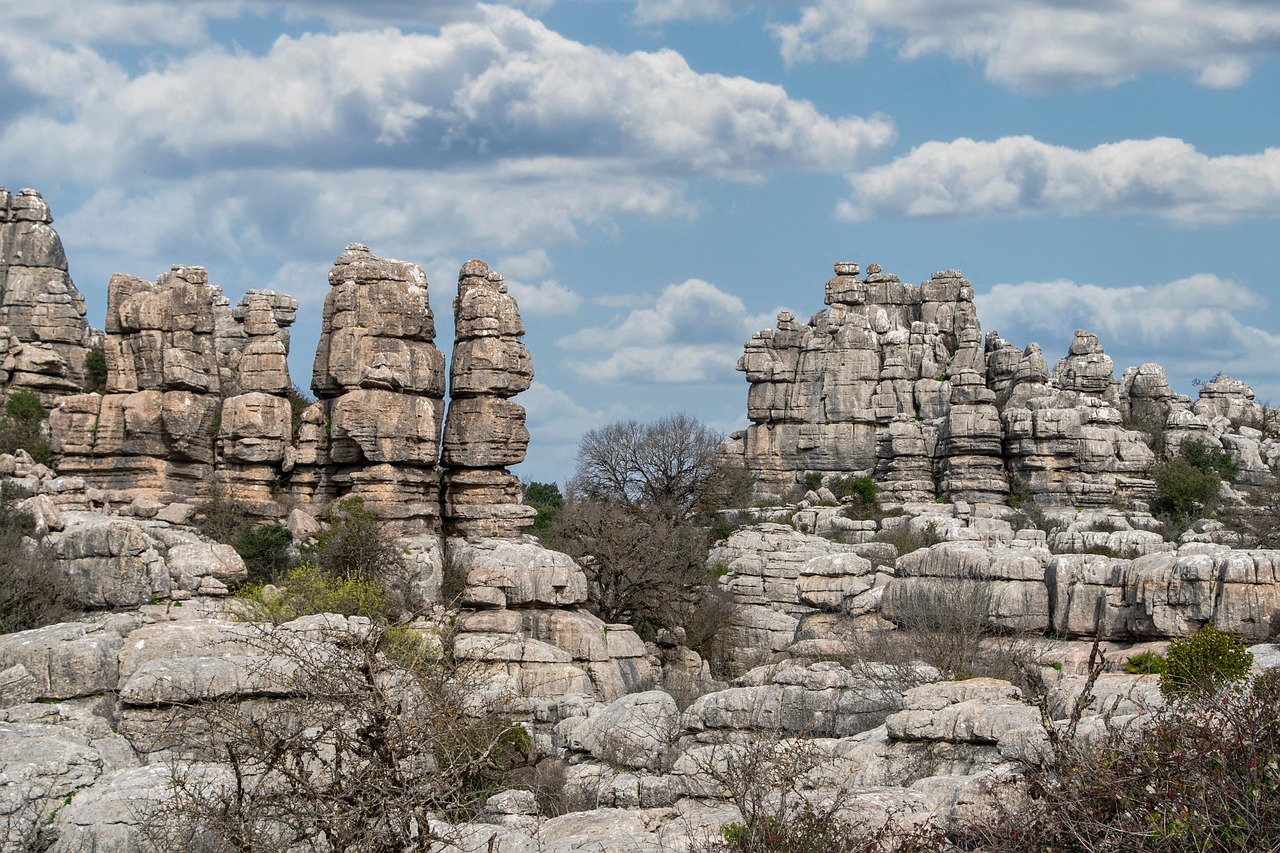
1. Torcal de Antequera, Málaga
This surreal limestone labyrinth looks like a giant sculptor went mad with 150 million years of Jurassic rock.
The karst formations have eroded into shapes that resemble jugs, screws, mushrooms, camels, and sphinxes—pareidolia heaven for imaginative visitors.
The limestone began forming on a seabed and was slowly pushed up by tectonic forces, then carved by wind and water into today’s alien landscape.
Well-marked hiking trails wind between the formations, though it’s easy to feel completely lost in this stone maze.
Prehistoric remains including dolmens and rock paintings prove that humans have been marveling at this place for thousands of years.
The erosion continues daily, meaning the landscape you see today will look subtly different in a thousand years.
2. Río Tinto, Huelva
This river runs blood-red—and has for over 5,000 years, ever since humans started mining copper and other metals from its banks.
The acidic, heavy-metal-laden water supports extremophile bacteria that NASA studies as analogs for potential life on Mars.
The surrounding landscape is equally otherworldly—barren hills in shades of red, orange, and purple that look completely inhospitable to life.
The Birthplace of the Copper Age sits along these banks, with mining operations dating back to the Phoenicians.
A heritage mining train runs along the river, offering views of a landscape that seems designed for a science fiction film.
Despite its toxic appearance, the river has become a draw for geologists, astrobiologists, and curious travelers seeking the truly strange.
3. Laguna Negra, Soria
Legend says this “Black Lagoon” is bottomless, connecting through underground caves all the way to the sea.
The glacial lake sits at the foot of massive rock walls, its dark waters reflecting the surrounding pine forests in an almost perfect mirror.
Spanish poet Antonio Machado immortalized the lake in verse, adding to its mysterious reputation.
The name comes from the extremely dark color of the water, caused by its depth and the surrounding dark rock.
Wooden walkways now circle parts of the shore, making access easier while preserving the wild atmosphere.
Visit in autumn when the surrounding forests explode in color, creating reflections that photographers travel across Spain to capture.
4. Bardenas Reales, Navarra
This semi-desert in northern Spain looks like it was teleported from Arizona—complete with eroded mesas, deep ravines, and clay plateaus.
The landscape has served as a filming location for everything from Game of Thrones to spaghetti westerns.
Castildetierra, a distinctive pointed hill, has become the park’s symbol—a clay and sandstone formation that defies expectations of Spanish scenery.
Wind and water erosion continue to sculpt this UNESCO Biosphere Reserve, creating new formations while destroying old ones.
The complete absence of light pollution makes this one of Spain’s best stargazing locations after the sun show ends.
A network of trails allows exploration by foot, bike, or car—though the terrain can be challenging in wet weather.
5. Geoda de Pulpí, Almería
The world’s second-largest geode opened to the public in 2019—a crystal cave measuring 8 meters long by 2 meters tall hidden in an abandoned mine.
The gypsum crystals inside formed over millions of years, creating a glittering chamber that looks like something from a fantasy novel.
Madrid-based mineralogists discovered it in the abandoned Mina Rica, where iron, lead, and silver were extracted until the Spanish Civil War.
Visits require advance booking and involve donning protective suits to preserve the fragile crystal environment.
The experience of standing inside a giant geode, surrounded by translucent crystals, is genuinely unlike anything else on Earth.
Strict visitor limits help preserve this geological treasure for future generations.
6. Encantadas Rock Formations, Cuenca
Ciudad Encantada (the “Enchanted City”) features limestone formations eroded into shapes so specific they’ve earned individual names.
The 90-million-year-old rocks have become boats, mushrooms, seals, and bridges—natural sculptures scattered across a pine forest.
The Tormo Alto stands 20 meters tall, a seemingly impossible balancing act of stone that has defied gravity for millennia.
A designated trail winds through the formations, allowing visitors to play the game of identifying shapes in the weathered limestone.
The site was declared a Natural Site of National Interest in 1929, protecting these strange formations from development.
Fog adds another dimension, transforming the landscape into something genuinely enchanted.
7. Desierto de Tabernas, Almería
Europe’s only true desert stretches across southeastern Spain, where annual rainfall barely reaches 200mm.
The sun-scorched badlands have starred in countless spaghetti westerns, with old film sets still standing among the gullies and arroyos.
The landscape of eroded clay and sandstone creates formations that wouldn’t look out of place in Nevada or New Mexico.
Temperatures regularly exceed 45°C in summer, making this genuinely hostile terrain rather than a gentle imitation.
The desert supports unique adapted species, including lizards and insects found nowhere else in Europe.
Film history tours visit the remaining sets from movies like “The Good, the Bad and the Ugly” and “Lawrence of Arabia.”