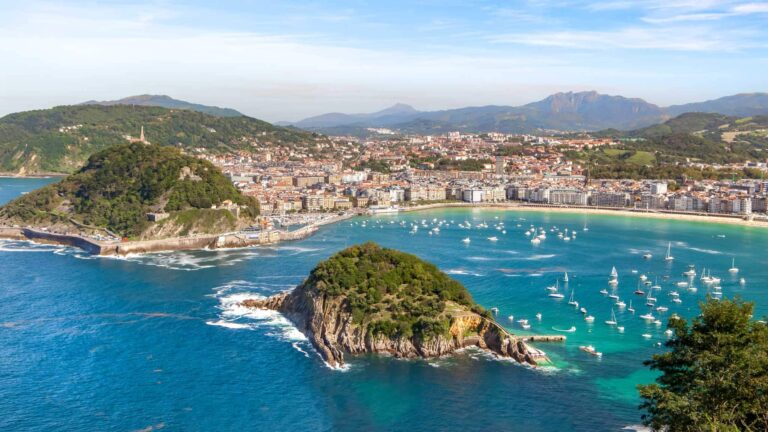
Spain’s Most Windswept Atlantic Beaches That Feel Wild and Free
Forget the calm, turquoise waters of the Mediterranean—Spain’s Atlantic coast is a completely different beast.
This is where serious waves crash against dramatic cliffs, where the wind has sculpted landscapes for millennia, and where beaches feel genuinely untamed.
Stretching from Galicia in the northwest through Asturias, Cantabria, and into the Basque Country, Spain’s northern Atlantic shoreline is part of what’s called “Green Spain”—a region so different from the sunny south it feels like another country entirely.
The Romans thought this was the end of the world, and standing on a windswept beach watching the Atlantic roll in, you’ll understand why.
These beaches aren’t for lounging with a cocktail (though you can definitely do that too).
They’re for surfers chasing swells, hikers exploring rugged coastlines, and anyone who wants their beach experience to come with a side of drama and raw natural power.
Pack a windbreaker and leave your expectations at home.
1. Playa de Rodas, Cíes Islands, Galicia
The Guardian once called this the best beach on the planet—and while that’s subjective, it’s hard to argue once you’ve actually seen it.
Located on Monteagudo Island in the Cíes archipelago, part of the Atlantic Islands of Galicia National Park, Playa de Rodas features 1,300 meters of white sand that would look at home in the Caribbean.
The difference? This is the Atlantic, baby.
The island has no cars and no hotels—just pristine nature, impressive pine forests, and one of the most protected marine environments in Spain.
Access is by boat from Vigo, and daily visitors are capped at 2,000 to protect this precious ecosystem, so book your tickets well in advance.
The water is crystal clear but refreshingly cold, the wind keeps the air fresh even on the hottest days, and the sense of having discovered something truly special never fades.
This isn’t just wild and free—it’s practically untouched.
2. Playa del Silencio (Gavieiro), Asturias
The name says it all: Silence Beach.
Set among impressive cliffs in the small town of Castañeras in Cudillero, this virtually untouched beach is one of the most breathtaking on the entire Cantabrian Sea.
The islets and rock formations offshore temper the force of the Atlantic waves, reducing the roar to something like a murmur—hence the poetic name.
Access is only on foot, about 15 minutes from the car park, but the viewpoint overlooking the beach before you descend is worth the trip alone.
The beach itself is composed of rounded stones rather than sand, backed by green cliffs that wouldn’t look out of place on Ireland’s Wild Atlantic Way.
Facilities are minimal to nonexistent—this is about experiencing nature, not convenience.
Come at sunrise or sunset when the light paints those rock formations in impossible colors, and you’ll understand why Asturians are so fiercely proud of their coast.
3. Playa de las Catedrales, Galicia
Yes, this beach makes every list—and for good reason.
Near Ribadeo on the Galician coast, the Beach of the Cathedrals features 30-meter-high rock arches and flying buttresses carved by the Cantabrian Sea over millions of years.
At low tide, you can walk through these natural stone cathedrals, entering caves and passing beneath arches that genuinely feel like something from a fantasy novel.
When the wind whistles through the caverns, locals say it sounds like ghostly organ music.
This is the Atlantic at its most theatrical—you’re witnessing the ongoing geological battle between land and sea in real time.
Reservations are required during summer months (July through September), and you absolutely must check tide schedules before visiting.
At high tide, much of the beach—and all of those spectacular formations—disappears entirely beneath the waves.
This is nature reminding you who’s really in charge.
4. Playa de Carnota, Galicia
At over 7 kilometers long, Carnota is considered the longest beach in Galicia—and one of the most magnificently wild.
This isn’t a beach lined with hotels and beach bars.
It spreads over a practically unaltered coastline with native flora, wide areas of dunes, and surrounding forest groves, meadows, and cultivated fields.
The sand is white, the waves are powerful, and the sense of space is almost overwhelming—you can walk for ages without seeing another soul.
Behind the beach, the marshes and dunes create important wildlife habitat, adding ecological value to the stunning scenery.
Local facilities are basic, which is exactly the point: this is what the Spanish Atlantic coast looked like before tourism transformed it.
If you want to feel the full raw power of Galicia’s coastline with space to breathe, Carnota delivers like few other beaches can.
5. Playa de Oyambre, Cantabria
Stretching about 2 kilometers and boasting a stunning field of sand dunes, Oyambre is the crown jewel of the Cantabrian coastline.
Located just west of Comillas and protected as part of Oyambre Natural Park, this beach is famous for one particular image: the “Oyambre Curve,” where the beach sweeps past crop fields planted just steps from the shore.
It’s the kind of scene that makes you question whether you’re still in Spain or have somehow teleported to Ireland or Brittany.
The setting includes the La Rabia estuary, farmland, and well-conserved natural dunes—a snapshot of how Atlantic Spain looked centuries ago.
Surfers love the consistent swells here, while hikers appreciate the coastal paths that wind through the natural park.
The wind is almost always present, the light is constantly changing, and the whole scene has an almost cinematic quality that landscape photographers go crazy for.
6. Playa de Zarautz, Basque Country
At about 2.5 kilometers, Zarautz boasts one of the longest urban beaches in northern Spain—and it’s the undisputed capital of Basque surfing.
The Atlantic swells that roll into this exposed beach have made it a destination for wave riders from across Europe, hosting multiple international competitions throughout the year.
The town behind the beach adds character: Basque architecture, excellent pintxos bars, and that distinctive culture that makes this region feel like its own little country.
Even if you don’t surf, watching the locals charge the waves while you enjoy a cold Txakoli wine on the promenade is pretty much perfection.
The beach faces west-northwest, meaning sunsets here are legendary—all that Atlantic expanse glowing orange and pink as the sun drops into the Bay of Biscay.
This is where wild Atlantic energy meets sophisticated Basque culture, and the combination is irresistible.
7. Playa de Mundaka, Basque Country
Surfing fans already know this name—Mundaka is home to one of the best left-hand barrel waves in the world.
When conditions align (usually autumn and winter), this Basque estuary produces tubes so perfect that professional surfers travel from Hawaii and Australia just to ride them.
Even if you’re not a surfer, watching experts tackle these waves from the harbor wall or surrounding clifftops is spectacular entertainment.
The town itself is charming—a traditional Basque fishing village with colorful buildings, narrow streets, and excellent seafood restaurants.
The beach is small and can disappear at high tide, but the atmosphere is authentically Atlantic: wind-whipped, dramatic, and unapologetically wild.
This is a place that feels connected to the sea in ways most tourist beaches never could.
8. Praia de Área Longa, Galicia
On the wild Costa da Morte (Coast of Death)—named for the countless shipwrecks that have occurred here over centuries—Área Longa offers a taste of Galicia at its most untamed.
This is white sand beach surrounded by dramatic cliffs, wild dunes, and that trademark Atlantic atmosphere where the weather can change in minutes.
The Costa da Morte isn’t dramatic for nothing: the winds here can be fierce, the currents powerful, and the sea unforgiving.
But on calm days, the beauty is almost otherworldly—think turquoise waters, pristine sand, and virtually no crowds because most tourists stick to safer, more developed areas.
Local legends speak of Celtic spirits, shipwrecked sailors, and the ancient belief that this truly was where the world ended.
Standing here when the Atlantic is putting on a show, it’s easy to believe them.
9. Playa de Liencres, Cantabria
Located inside the Parque Natural de las Dunas de Liencres (Liencres Dune National Park), this beach offers the rare combination of natural protection and wild Atlantic energy.
Hectares of protected dunes and maritime pine forest back the beach, creating a landscape that feels genuinely pristine despite being just a short drive from Santander.
The consistent winds and waves make this a hotspot for surfers, windsurfers, and kite surfers—pretty much anyone who wants the Atlantic to power their fun.
The national park status means development is strictly limited, preserving that sense of wildness that so much of Spain’s coast has lost.
Walking through the dunes to reach the beach is part of the experience—you earn your spot in the sand, and the reward is a stretch of coast that looks almost exactly as it did centuries ago.
Pack layers, because even in summer, this is the Atlantic—the weather has opinions.
10. Playa de la Lanzada, Galicia
Stretching for nearly 2.5 kilometers along the southern edge of the O Grove peninsula, La Lanzada is where Galicia’s famous Rías Baixas face the full force of the Atlantic.
The beach is exposed to prevailing winds, creating conditions that draw windsurfers and kitesurfers from across Spain.
But even if you’re just here to walk, the scale and wildness of this beach is impressive—wide white sand, powerful waves, and views toward the Cíes Islands on clear days.
Behind the beach stands the chapel of Nosa Señora da Lanzada, where an ancient fertility ritual has women bathing in the waves during summer solstice.
The whole area has a mystical quality that connects to Galicia’s Celtic heritage—standing stones, local legends, and that sense of being at the edge of the known world.
This is the Atlantic coast as it was meant to be experienced: powerful, beautiful, and completely untamed.
Bring your sense of adventure and leave your resort expectations behind.