Spain’s Most Impressive Medieval Walled Towns That Time Completely Forgot
For about 1,500 years, basically everyone who showed up to the Iberian Peninsula wanted to fight someone—Romans, Visigoths, Moors, Christian kingdoms, you name it.
The result is that Spain ended up with more medieval walled towns than almost anywhere else in Europe, many of them remarkably intact because they were simply too remote to tear down for development.
These aren’t your typical over-restored tourist attractions with gift shops every ten meters.
We’re talking about places where you can walk ancient ramparts, explore crumbling towers, and genuinely feel like you’ve slipped through a crack in time.
From Roman fortifications that predate Christianity to Moorish strongholds that held out for centuries, these walled towns tell the complete story of Spanish history in stone.
Pack your imagination (and comfortable shoes), because these medieval marvels are absolutely worth the journey to find them.
1. Ávila – The Most Complete Medieval Walls in the World
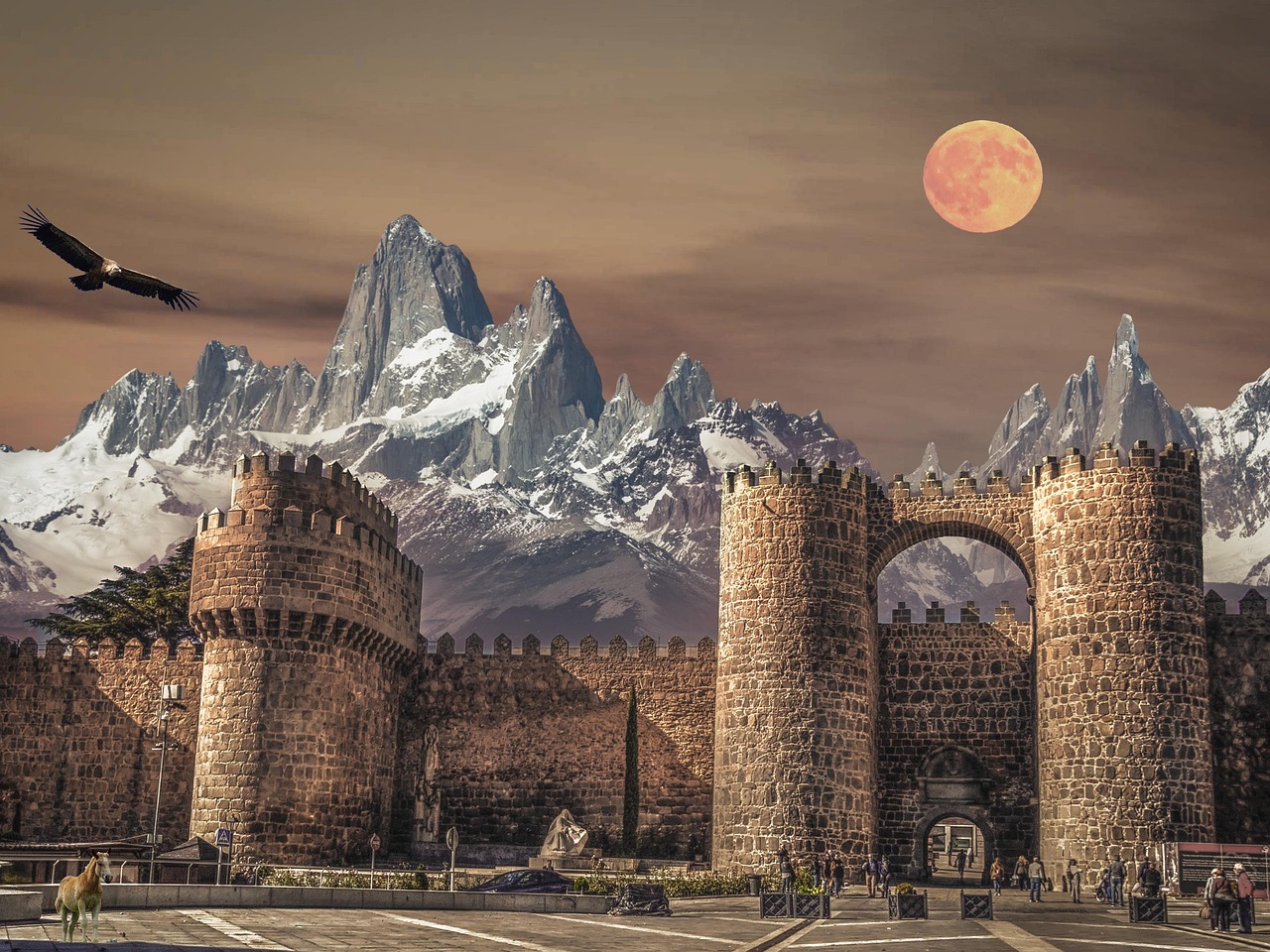
If you only visit one walled city in Spain, make it Ávila—home to the best-preserved medieval walls on the entire planet.
Stretching over 2.5 kilometers with 87 towers, the walls form a complete circuit around the old town that you can actually walk on top of for spectacular views.
Construction began in the 11th century after Christian forces recaptured the city from the Moors, and the fortifications took decades to complete.
The walls average 3 meters thick and 12 meters high, creating an impenetrable stone barrier that successfully protected the city for centuries.
Saint Teresa of Ávila, one of Spain’s most important religious figures, was born here in 1515, and her legacy remains deeply woven into the city’s identity.
Being just 90 minutes from Madrid, Ávila makes an easy day trip, though spending a night inside the walls allows you to experience the town after the tourists leave.
2. Albarracín – Spain’s Pink-Hued Medieval Treasure
Perched on a rocky promontory almost completely surrounded by the Guadalaviar River, Albarracín isn’t just walled—it’s practically impregnable.
The town’s distinctive pink and ochre buildings, wooden balconies, and labyrinthine cobblestone streets have remained virtually unchanged for centuries.
Writer Azorín called it “the most beautiful town in Spain,” and after walking its medieval streets, you’ll understand the claim wasn’t exaggeration.
The name itself reveals history: a Muslim group belonging to the Ibn Racin lineage settled here in the 11th century, and “Albarracín” evolved from their family name.
Minimal reconstruction has been done to the defensive walls, making them the best-preserved example of their kind in all of Spain.
Unlike many tourist destinations, Albarracín is genuinely remote—about 3 hours from Madrid—which keeps crowds manageable and atmosphere authentic.
Hiking the entire perimeter of the city walls takes about 2 hours over fairly rough terrain, but the views from the top make every step worthwhile.
3. Morella – The Fortified Town on a Throne of Rock
In the Castellón region, rising like a medieval fever dream from the surrounding countryside, Morella sits crowned by an imposing castle that looks straight out of a fantasy novel.
Almost complete 14th-century fortifications—built on top of earlier Arab ramparts—surround this hilltop town located about 50 kilometers inland from Peñíscola.
The winding streets are packed with medieval temples, including the convent of San Francisco, the church of Santa María, and the hermitage of Santa Llúcia.
Perhaps the town’s most extraordinary engineering achievement is the Gothic aqueduct of Santa Lucía, a 14th-century marvel that supplied water to the fortress community.
The Basilica de Santa Maria la Mayor features elaborately sculpted doors and a carved polychrome stone staircase leading to an ornate altar that took your breath away in the 14th century and still does today.
Morella is known for its artisan baked goods and fortified wine, so budget time for culinary exploration alongside your medieval wandering.
4. Besalú – Catalonia’s Medieval Jewel
One of the most unique facts about Besalú is that from 894 to 1111, it was actually an independent country with its own ruling dynasty.
Today, this dreamy, beautifully-preserved small town in Catalonia retains all of its medieval character, from fortress walls to Jewish heritage sites.
The trademark sight is Pont Vell, an ancient 12th-century bridge crossing the River Fluvià with 8 unequal arches that leap from rock to rock across 105 meters.
Large sections of walls built between the 12th and 14th centuries remain intact, including the 14th-century Portal del Horts (Mill Gate).
Rare Jewish baths, discovered in the 1960s, offer a glimpse into the medieval Jewish community that once thrived here.
Sant Vicenç, dating from the 10th century with a particularly beautiful rose window, is considered Besalú’s best Romanesque church.
A tourist train leaves from the medieval bridge every 45 minutes, visiting the baths and churches if you prefer guided exploration over independent wandering.
5. Galisteo – The Almohad Fortress Nobody Visits
Far off the tourist trail in sparsely-populated western Extremadura, few visitors reach the little town of Galisteo—which is precisely what makes it special.
The town remains fully enclosed within medieval ramparts originally built by the Moors, with only three narrow gateways providing access.
Exceptional preservation means you can walk atop the 13th-century Almohad walls with virtually no other tourists in sight.
The tower of homage from the old fortress allows you to see the town from miles around, just as defenders would have centuries ago.
Inside, a church with a Mudejar apse from the same century as the defensive walls survives alongside traditional homes that haven’t changed much since medieval times.
Getting here requires effort and probably a rental car, but that effort is rewarded with one of Spain’s most authentic time-travel experiences.
6. Tossa de Mar – The Medieval Town on the Beach
Want medieval walls with your Mediterranean swim?
Tossa de Mar’s Vila Vella is an impressive 12th-century walled enclosure perched on a promontory overlooking turquoise waters—the only fortified medieval town on the Catalan coast preserved in such excellent condition.
After passing through the gateway onto Plaza de Vila, you’ll find art galleries, restaurants, and antique stores tucked into ancient stone buildings.
The Santa Lucia Bastion offers stunning views over the harbor, making it one of the Costa Brava’s most photogenic spots.
The castle no longer remains—a lighthouse stands in its place—but the 13th-century walls give you the full medieval experience with beach access.
Unlike inland walled towns, Tossa offers the unique opportunity to combine historical exploration with swimming, creating a perfect day trip from Barcelona.
7. Cáceres – The Medieval City That Became a Film Set
Walking into Cáceres feels like stepping onto a medieval movie set—which makes sense, since it literally has been one.
This UNESCO World Heritage Site served as the backdrop for Casterly Rock in the seventh season of HBO’s Game of Thrones, and once you see it, you’ll understand why.
Walls built by the Moors are remarkably well-preserved, enclosing cobblestone streets, fortified houses, and centuries-old towers.
The Plaza Mayor provides a gathering point from which to explore the seemingly endless medieval lanes radiating outward.
Unlike some walled cities that feel frozen in time, Cáceres maintains a lively university atmosphere, with students adding energy to ancient streets.
Local tapas culture is exceptional—pull up a chair in any plaza bar and let the medieval ambiance wash over you with a glass of local wine.
8. Lugo – The Only Complete Roman Walls in the World
While most walled cities in Spain date from medieval times, Lugo goes much further back—its walls are entirely Roman and completely intact.
Built between the 3rd and 4th centuries AD, the massive fortifications stretch 2,117 meters in a complete circuit that you can walk atop.
These walls were broad enough to drive a chariot along the top, and today they serve as popular walkways with 360-degree views of both the old town and surrounding countryside.
UNESCO recognized Lugo’s walls as World Heritage in 2000, acknowledging them as the best-preserved example of late Roman military fortification in all of Western Europe.
Ten original gates still provide entry to the old town, each with its own history and character.
Galicia is famous for incredible tapas, and Lugo is no exception—complete your wall walk with a food tour through the old town’s countless bars.
9. Trujillo – The Land of Conquistadors
Located between Madrid and Lisbon on top of a mountain ridge, Trujillo’s impressive fortifications landed it the role of Castlerly Rock in Game of Thrones.
The walls were built by Arabs and protected the city from Christian armies for 500 years before finally falling in 1232.
After reconquest, Trujillo became famous as the “land of conquistadors”—Francisco Pizarro, who conquered the Inca Empire, was born here.
A statue of Pizarro on horseback stands in the main square, a controversial but historically significant monument to the town’s most famous son.
The Jewish quarter, remains of medieval walls, and grand Church of Sant Vicenç all reward exploration.
Being under 3 hours from both Madrid and Toledo, Trujillo makes an excellent stop on any central Spain road trip.
10. Pedraza – The Medieval Town Frozen in Time
Enter through a single fortified gate, and you’ve essentially left the 21st century behind.
Pedraza’s exteriors create a true getaway to the Middle Ages, with conservation so thorough that the entire town feels like an open-air museum.
Watered by the Cega, San Miguel, and Vadillo streams, this Segovia province gem features an extraordinary medieval prison that’s been carefully transformed into a museum.
The town hosts famous candlelit concerts in summer, when the streets are illuminated only by thousands of candles—an experience that sells out months in advance.
With virtually no modern development inside the walls, photographers find Pedraza irresistible regardless of season.
Day-trippers from Madrid have discovered Pedraza’s charm, but staying overnight reveals the town’s true magic after the crowds depart.