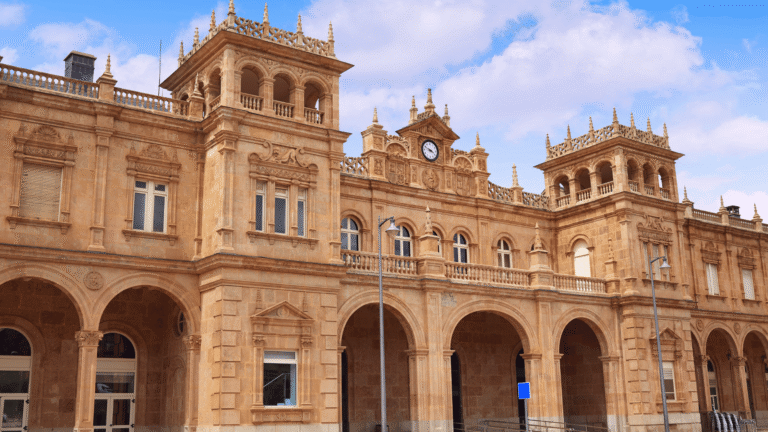
Spain’s Most Elegant Theaters You Need to See From the Inside
Spain takes its theaters seriously—like, really seriously.
We’re not talking about sterile modern concert halls with good acoustics and uncomfortable seats.
These are velvet-draped temples of performing arts where the architecture competes with whatever’s happening on stage, where chandeliers the size of small cars hang above horseshoe-shaped auditoriums, and where even the bathrooms have more character than most buildings.
From ancient Roman amphitheaters still hosting summer productions to Baroque opera houses that have survived fires, wars, and changing tastes, Spain’s theatrical heritage is absolutely extraordinary.
The best part? Many of these venues offer tours even when performances aren’t happening, meaning you can explore their gilded halls, climb their grand staircases, and stand on stages where legends have performed.
Get ready to add some serious elegance to your Spanish itinerary, because these theaters demand to be seen from the inside.
1. Gran Teatre del Liceu, Barcelona – The Phoenix That Keeps Rising
The Liceu has burned down not once, not twice, but essentially three times—and each time, Barcelona rebuilt it more magnificent than before.
Originally opened in 1847 right on La Rambla, this Catalan masterpiece was destroyed by fire in 1861, bombed by an anarchist in 1893, and devastated by a blowtorch accident in 1994 that gutted the auditorium and stage.
What stands today is a 1999 reconstruction that honors the original while incorporating modern safety and acoustic technology.
Walking through those doors feels like stepping into another century—crystal chandeliers cascade from ornate ceilings, plush red velvet covers 2,292 seats arranged across five tiers, and the whole place practically drips with Catalan cultural pride.
Even if you can’t catch a performance (and honestly, try to catch a performance), guided tours let you wander the opulent foyer, climb to the upper balconies, and understand why this theater is considered one of Europe’s greatest opera houses.
The acoustics are so precise that no amplification is needed, ever.
2. Teatro Real, Madrid – The Royal Stage That Commands Attention
Standing directly across from the Royal Palace on Plaza de Oriente, Teatro Real was always meant to impress.
King Fernando VII ordered its construction in 1818, though delays meant it didn’t actually open until 1850—giving architects plenty of time to perfect every neoclassical detail.
The building spans a staggering 65,000 square meters and seats 1,746 people in an auditorium dominated by a Royal Box so elaborately designed it includes its own bathroom and private elevator.
Tours take you through the grand galleries, up magnificent staircases, and into the main hall where the massive dome and chandelier create that gasp-inducing moment every great theater needs.
There’s even a model of the entire opera house that reveals the incredible backstage machinery required for world-class productions.
Teatro Real hosts Spain’s premier opera and ballet seasons, and tickets can be notoriously hard to get—but even just walking around Plaza de Oriente at night, watching the illuminated façade reflect off the palace opposite, is pretty magical.
3. Corral de Comedias, Almagro – The 17th-Century Time Capsule
This is where things get really special, because the Corral de Comedias in Almagro is the oldest functioning theater in Spain—and the only one that still preserves its original 17th-century structure.
Built in 1628 as both an inn and a theater (performances happened in the courtyard while guests watched from balconies above), this is exactly where Lope de Vega and Calderón de la Barca would have seen their works performed.
The intimate venue seats just 300 people on wooden galleries surrounding a floor-level stage, with the open sky above (now covered with retractable glass) providing natural light.
Every July, the International Classical Theatre Festival brings Golden Age Spanish drama back to this courtyard, and watching a play here is about as close to time travel as theater gets.
Even outside festival season, tours let you explore the space, stand on the simple wooden stage, and imagine audiences from four centuries ago experiencing these same acoustics.
The surrounding Plaza Mayor of Almagro, with its green-painted wooden galleries, only amplifies the sense of stepping into Spain’s theatrical past.
4. Teatro Campoamor, Oviedo – Where Opera Meets Aristocracy
The cultural epicenter of Asturias since 1892, Teatro Campoamor is where elegance meets northern Spanish understatement.
Named after the famous Asturian poet Ramón de Campoamor (at the suggestion of novelist Leopoldo Alas “Clarín”), this neoclassical beauty hosts Spain’s second-oldest opera season after Barcelona’s Liceu.
The horseshoe-shaped auditorium seats 1,491 across five levels, each tier decorated with bronze fittings, wooden balustrades, and the kind of ornate moldings that reward close inspection.
But what really sets Campoamor apart is its cultural significance: every October, the Princess of Asturias Awards ceremony takes place here, often called the second-most important awards after the Nobels.
Pavarotti, Montserrat Caballé, José Carreras, and countless other legends have performed on this stage, and the theater also hosts the only zarzuela (Spanish operetta) season outside Madrid.
The building was nearly destroyed during the 1934 Revolution and the Spanish Civil War, making its survival and continued operation feel like an act of cultural defiance.
5. Teatro de la Maestranza, Seville – Modern Elegance on the Guadalquivir
Not every great theater needs to be ancient, and Seville’s Teatro de la Maestranza proves that modern design can hold its own against the Baroque masters.
Opened in 1991 specifically to serve Andalusia’s opera-hungry audiences, this 1,800-seat venue was designed to blend seamlessly with the city’s historic architecture while incorporating contemporary acoustic technology.
The result is a horseshoe-shaped hall with excellent sightlines from every seat and acoustics that consistently rank among Spain’s finest.
But the real magic is the location: the theater sits right on the Guadalquivir River, and its terraces offer views across the water that make intermission feel like an event in itself.
Maestranza has become famous for productions that blend traditional opera with flamenco influences, creating uniquely Andalusian performances you won’t find anywhere else.
If you’re visiting during Semana Santa or Feria de Abril, check the schedule—attending a performance here is one of Seville’s great cultural experiences.
6. Teatro Romano de Mérida – Where Ancient Stones Host Living Drama
Let’s be honest: calling a 2,000-year-old Roman amphitheater a “theater” feels like an understatement.
Built around 16 BC, Mérida’s Roman Theater is one of the best-preserved examples of its kind anywhere in the former empire, with its original two-story scaenae frons (stage backdrop) still standing largely intact.
Every summer since 1933, the Mérida Classical Theatre Festival has brought ancient drama back to these stones, with audiences of 3,000 sitting on the same granite seats their ancestors used millennia ago.
Watching Greek tragedy or Roman comedy performed here, as the sun sets behind the colonnaded stage and the first stars appear overhead, is genuinely transcendent.
Outside festival season (July and August), the theater is part of the larger Mérida archaeological site and can be visited for the price of a combined ticket.
Stand on the stage, climb to the upper rows, and let the weight of two thousand years of theatrical tradition settle over you.
7. Palau de les Arts Reina Sofía, Valencia – The Future of Opera
If you want to see what happens when a starchitect designs an opera house without budget constraints, welcome to Valencia’s City of Arts and Sciences.
Santiago Calatrava’s Palau de les Arts looks like something from a science fiction film—all sweeping white curves, exposed steel, and impossible angles—and the interior is equally audacious.
The main hall seats 1,700 beneath a ceiling that seems to defy physics, while three additional performance spaces allow simultaneous productions.
This isn’t your grandmother’s opera house, and that’s entirely the point.
Opened in 2005, the Palau has quickly established itself as a serious venue for contemporary opera and experimental productions that might feel out of place in more traditional settings.
Tours of the City of Arts and Sciences complex often include access to the Palau’s public spaces, though seeing a performance inside that main hall is the real prize.
8. Teatro Español, Madrid – The Writer’s Stage Since 1583
Located in Plaza de Santa Ana, Teatro Español has been entertaining Madrid audiences since the 16th century, making it one of Europe’s oldest continuously operating theaters.
Lope de Vega lived just steps away and premiered many of his most famous works here; the building practically breathes Spanish Golden Age drama.
The current structure dates from various reconstructions (theaters have a habit of burning down), but the intimate atmosphere and commitment to Spanish-language productions remain unchanged.
This is the theater for serious Spanish drama—both classics and contemporary works—performed by the country’s finest stage actors.
Even if you don’t speak Spanish, attending a production here connects you to a theatrical tradition that influenced everything from Shakespeare to Broadway.
9. Teatro Principal de València – Older Than You’d Guess
València’s Principal holds a surprising distinction: it’s the oldest surviving theater in the city and actually predates both Madrid’s Teatro Real and Barcelona’s Liceu.
Construction began in 1774, was interrupted by the Peninsular War, resumed in 1831, and the building finally opened in 1832—a 58-year labor of theatrical love.
The three-story auditorium seats about 1,200 in classic Italian horseshoe style, with the kind of creaky wooden seats and gilt decorations that transport you instantly to 19th-century València.
When the much larger Palau de la Música temporarily closed for repairs in 2019, the Principal stepped up to host the Valencia Orchestra, proving that old venues can still deliver world-class performances.
The theater continues hosting opera, concerts, and the prestigious José Iturbi Piano Prize competition.
10. Teatro Arriaga, Bilbao – Neo-Baroque on the Nervión
Bilbao’s grandest theater opened in 1890, named after Juan Crisóstomo de Arriaga—a local composer often called the “Spanish Mozart” who died at just 19.
The neo-Baroque and eclectic design was directly inspired by the Paris Opera, and you can see it in every gilt surface, every crystal chandelier, and every meticulously painted ceiling panel.
Located right on the Nervión River, the theater anchors the Casco Viejo (Old Town) and serves as Bilbao’s primary venue for opera, theater, and dance.
The recent addition of the Guggenheim might have shifted the city’s cultural spotlight, but Teatro Arriaga remains Bilbao’s theatrical heart—a place where local traditions and international productions coexist beautifully.
Combined with a walk through the Old Town’s narrow streets and a pintxos crawl through nearby bars, an evening at Arriaga is quintessential Basque culture.