Spain’s Most Breathtaking Moorish Architecture That Will Transport You
For nearly 800 years, Muslim rulers transformed Spain into one of the most culturally rich regions on Earth.
They left behind architecture so beautiful, so intricate, so mathematically perfect that even the Christian kings who conquered them couldn’t bear to destroy it.
Instead, they moved in, adapted it, and sometimes hired Muslim craftsmen to build more in the same style.
The result is a treasure trove of Moorish architecture unmatched anywhere outside the Islamic world—palaces with honeycomb ceilings, mosques with endless arches, and gardens where water and geometry create earthly visions of paradise.
From the legendary Alhambra to lesser-known gems that most tourists miss entirely, Spain’s Islamic heritage offers experiences that genuinely change how you see architecture.
Ready to step into Al-Andalus?
1. The Alhambra, Granada
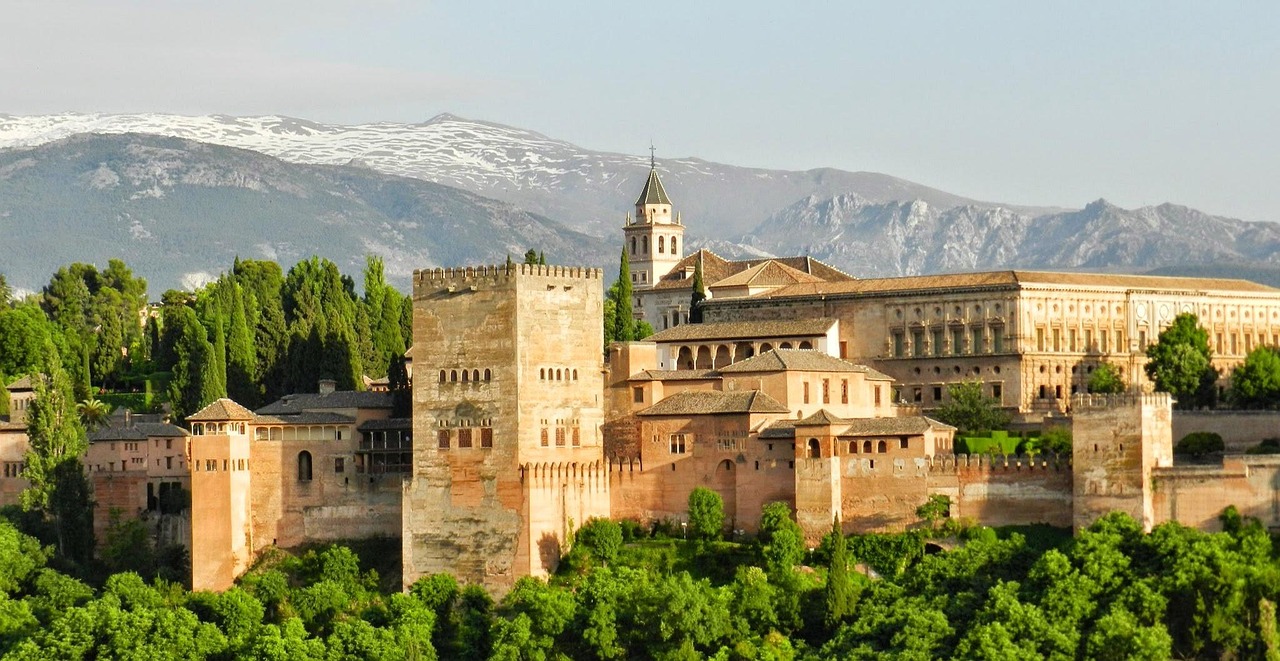
There’s a reason this is the most visited monument in Spain—the Alhambra is simply one of the most beautiful places human beings have ever created.
Built primarily during the 13th and 14th centuries by the Nasrid sultans, this palace-fortress complex crowns a hill overlooking Granada with the snow-capped Sierra Nevada as its backdrop.
The architecture is designed to be experienced from within, with decoration focused entirely on interior spaces where intricate stucco work, tile mosaics, and carved wooden ceilings create chambers of almost impossible beauty.
The Court of the Lions, with its famous fountain supported by twelve marble lions, is the heart of the palace—a space where slender columns support carved arches that seem to float on air.
Water plays a crucial role throughout, with reflecting pools that double the beauty of everything they mirror and fountains that provide constant, cooling sound.
American writer Washington Irving lived in the Alhambra’s ruins in 1829, writing “Tales of the Alhambra” and sparking the international fascination that saved the complex from further decay.
Book tickets well in advance—daily visitor numbers are limited, and this is one attraction that absolutely lives up to the hype.
2. The Mezquita, Córdoba
Walk through the orange-tree courtyard, pass through an unassuming door, and suddenly you’re standing in a forest of columns that seems to stretch to infinity.
The Great Mosque of Córdoba—the Mezquita—contains over 850 columns topped with the famous red-and-white striped horseshoe arches that have become the symbol of Moorish Spain.
Originally built in the 8th century on the site of a Visigothic church, the mosque was expanded multiple times until it could accommodate 40,000 worshippers.
The mihrab—the prayer niche indicating the direction of Mecca—is a masterpiece of Byzantine-influenced Islamic art, with intricate gold mosaics created by craftsmen sent by the Byzantine Emperor himself.
In the 16th century, a cathedral was built directly inside the mosque, creating a unique blend of Islamic and Christian architecture that disturbed even King Charles V, who reportedly said they had “destroyed something unique to build something ordinary.”
Despite his criticism, the combination is genuinely extraordinary—Gothic vaults rising from a sea of Islamic arches in a way found nowhere else on Earth.
The hypostyle hall creates a visual rhythm that’s almost hypnotic, and photographers can spend hours trying to capture its infinite perspectives.
3. Real Alcázar, Seville
This is the oldest royal palace still in use in Europe, and the Spanish royal family still stays in the upper levels when visiting Seville.
Originally built as a Moorish fort in the 10th century, the Alcázar was transformed over centuries by both Muslim and Christian rulers who shared an appreciation for Islamic aesthetics.
The result is Mudéjar architecture at its finest—a style where Muslim craftsmen worked for Christian patrons, blending Islamic decorative arts with European elements.
The Patio de las Doncellas (Courtyard of the Maidens) features elegant horseshoe arches reflected in a central pool, while the Salón de Embajadores (Hall of Ambassadors) is crowned by a spectacular gilded dome nicknamed “the half-orange.”
Game of Thrones fans will recognize the gardens as the Water Gardens of Dorne—and the lush, sprawling grounds are a destination in themselves.
Arabic inscriptions praising Christian King Peter I appear alongside Christian symbols, creating a uniquely Sevillian fusion that reflects the city’s complex history.
Unlike the Alhambra, the Alcázar rarely sells out—but it deserves equal attention from anyone interested in Moorish architecture.
4. La Giralda, Seville
This iconic bell tower started life as the minaret of Seville’s Great Mosque, built in the 12th century during the Almohad dynasty.
The elegant brickwork patterns, arched windows, and decorative cresting are textbook examples of Almohad architectural style, developed in Morocco and brought to Spain.
When Christians conquered Seville, they converted the mosque to a cathedral but wisely kept the minaret, adding a Renaissance-style bell tower on top.
The climb to the top follows a series of 35 ramps—designed for horses rather than stairs—that spiral upward with viewpoints at every turn.
From the summit, all of Seville spreads below, with the cathedral’s Gothic bulk revealing just how massive the original mosque must have been.
The weathervane figure at the very top, called the Giraldillo, gave the tower its current name and has become a symbol of the city.
La Giralda proves that the best way to preserve architectural heritage is sometimes simply to keep using it—this minaret has guided people upward for over 800 years.
5. Aljafería Palace, Zaragoza
While Andalusia gets most of the attention, this palace in Aragón is one of the finest examples of Moorish architecture in northern Spain.
Built in the 11th century by the Taifa rulers of Zaragoza, the Aljafería features ornate interior courtyards, stucco arches, and decorative elements that rival anything in the south.
The intricate geometric patterns and interlacing arches recall the grandeur of Córdoba during the Caliphate period, proving that Islamic artistic excellence extended far beyond Andalusia.
After the Christian reconquest, the palace was modified by Aragonese kings, including Ferdinand and Isabella, who added Gothic elements while preserving the Moorish core.
Today, the building houses the Aragonese parliament, but visitors can still explore the historic sections and appreciate this northern jewel of Islamic architecture.
The fact that such a magnificent example of Taifa-period art survives at all is remarkable—most palaces from this era were destroyed or built over.
Zaragoza itself is often overlooked by tourists, making the Aljafería a genuinely uncrowded alternative to the famous sites of Andalusia.
6. Alcazaba of Málaga
Perched on a hillside overlooking the Mediterranean, this 11th-century fortress is the best-preserved Moorish military architecture in Spain.
The Alcazaba’s double walls climb the slope through terraced gardens, with towers and gates designed to slow and confuse attacking armies.
Inside, the palace areas feature horseshoe arches with carved vegetal decoration that imitate—with local variations—the style of the great Caliphate in Córdoba.
Intersecting multifoil arches in the upper palace sections show how Moorish architects pushed decorative boundaries even in functional military buildings.
The views from the upper levels sweep across the city, the port, and the sea, explaining why this position was valued by every power that controlled Málaga.
A path connects the Alcazaba to the Gibralfaro Castle above, creating a fortified complex that dominated the coastline for centuries.
Most visitors to Málaga head straight for the beaches, making the Alcazaba relatively peaceful even in high season.
7. Medina Azahara, Córdoba
This palace-city was built in the 10th century to be the most magnificent capital in the world—and for a few decades, it probably was.
Constructed by Caliph Abd al-Rahman III just outside Córdoba, Medina Azahara covered an enormous area with palaces, mosques, gardens, and administrative buildings.
Tragically, it was destroyed during civil wars just 80 years after its completion, leaving ruins that lay largely forgotten until excavations began in the 20th century.
What survives—and has been painstakingly restored—offers a glimpse into the peak of Islamic Spain’s power and artistic achievement.
The intricate carvings, columns, and spatial arrangements represent Moorish architecture before it reached the Alhambra’s refinement, showing the roots from which later masterpieces grew.
A modern museum on site contextualizes the ruins and displays artifacts that survived the destruction, including stunning carved panels.
Visiting Medina Azahara after the Mezquita provides the complete picture of Córdoba’s Golden Age as the most advanced city in Western Europe.
8. Baños Árabes, Girona
These 12th-century baths in Catalonia demonstrate that Moorish influence extended far beyond the territories Muslims actually controlled.
Built by Christians in the Romanesque period, the baths incorporate Islamic architectural elements—particularly the octagonal central pool room with its slender columns and overhead lantern.
This is Mudéjar influence at work: Christian patrons adopting Islamic aesthetic forms because they were simply more beautiful and functional.
The baths are remarkably well-preserved, with the changing room, cold room, warm room, and hot room all intact.
Sunlight filters through the lantern and small windows, creating the atmospheric lighting that made Islamic bath architecture so distinctive.
Combined with Girona’s Jewish Quarter and its medieval streets, the Arab Baths offer insight into how different cultures influenced each other in medieval Spain.
This is one of the best-preserved medieval bath complexes in Spain and well worth a stop for anyone exploring Catalonia.
9. Torre del Oro, Seville
This iconic twelve-sided tower guarding the Guadalquivir River is classic Almohad military architecture—and it’s survived since the 13th century.
The distinctive brickwork patterns that decorate its exterior are typical of the Almohad dynasty, who brought building techniques from Morocco to Spain.
Originally, the tower was topped with golden tiles that gave it its name—Tower of Gold—though today’s cream-colored walls are less flashy but equally impressive.
A chain once stretched from the tower across the river to another tower on the opposite bank, closing the port to unauthorized vessels.
Inside, a small naval museum chronicles Seville’s maritime history, with exhibits on the treasure fleets that once made this river Spain’s gateway to the Americas.
The riverside location makes the Torre del Oro perfect for photos, particularly at sunset when the golden light brings back echoes of its original gleaming exterior.
Combined with a stroll along the river promenade, this is an essential Seville experience.
10. Generalife Gardens, Granada
The Nasrid sultans built the Generalife as their summer palace and pleasure gardens, a retreat from the formal court of the Alhambra across the ravine.
Islamic garden design reaches its peak here, with water channels, fountains, and cypress-lined walkways creating the earthly paradise that Islamic tradition promises the faithful.
The Patio de la Acequia, with its long central water channel bordered by flower beds and arched porticoes, is the iconic image of the Generalife.
Higher up, the Escalera del Agua uses water flowing down the balustrades as both decoration and cooling system—a brilliant fusion of beauty and function.
The gardens climb the hillside in terraces, with views back toward the Alhambra that provide the famous postcard images of the palace complex.
Spring and early summer see the roses and other flowers at their peak, though the gardens offer beauty in every season.
The Generalife is included with Alhambra tickets but deserves its own focused visit—rushing through would miss the contemplative atmosphere it was designed to create.