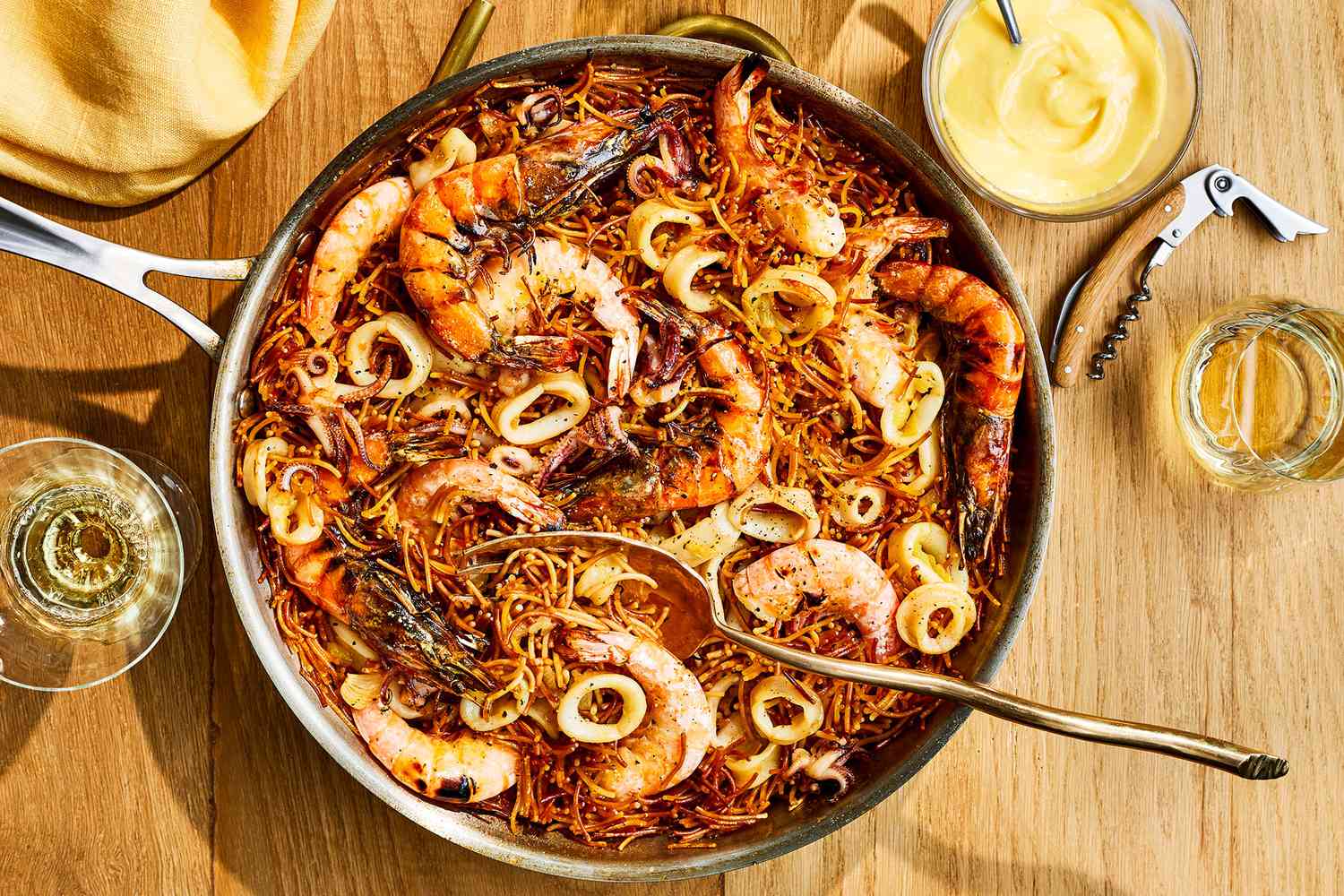
Forget Paella: Fideuà Is Spain’s Best-Kept Food Secret
Everyone’s heard of paella — that golden, saffron-scented rice dish that’s become Spain’s unofficial national meal. But ask a local along the Mediterranean coast what they really crave, and they’ll probably point you toward something even better: fideuà.
It looks like paella’s twin at first glance — cooked in the same wide, shallow pan, often filled with seafood and that same irresistible mix of flavors — but there’s one key difference: no rice.
Instead, it’s made with short, thin noodles (fideos), toasted in olive oil before being cooked in rich fish broth until they absorb every drop of flavor. The result? A dish that’s lighter, crispier on top, and somehow even more addictive than paella.
What Exactly Is Fideuà?
Fideuà was born in Gandía, a coastal town in the Valencian Community, just south of Valencia — paella’s homeland. Legend has it that a ship’s cook invented it by accident in the early 20th century when he ran out of rice. He swapped in noodles instead, and the sailors loved it so much, it became a local obsession.
Today, it’s a classic of the Valencian coast, often found in seaside restaurants from Dénia to Alicante, usually cooked in a traditional paellera (paella pan) over an open flame.
How It’s Made
The magic of fideuà is in the method.
- The base: Olive oil, garlic, tomatoes, and paprika are cooked down into a rich sofrito (flavor base).
- The noodles: Short, thin fideos are added and toasted until golden brown — a crucial step that gives the dish its nutty depth.
- The broth: A flavorful seafood stock — made from shrimp shells, fish heads, or squid — is poured in and simmered until the noodles soak up every last bit.
- The topping: Often finished in the oven for that irresistible, slightly crispy top layer.
It’s typically served with a dollop of alioli — a garlicky mayonnaise that cuts through the richness perfectly.
Why It’s Better Than Paella (Yes, We Said It)
- More flavor: The toasted noodles absorb the broth more deeply than rice ever could.
- Better texture: The contrast of crispy, chewy, and soft noodles is unbeatable.
- Faster cooking: No need to wait for rice to absorb the liquid — fideuà cooks in a fraction of the time.
- Less filling: It’s lighter but still full of umami-packed seafood flavor.
Plus, let’s be honest — paella might win on fame, but fideuà wins on surprise. It’s the dish that makes you say, “Why have I never had this before?”
Where to Try It
- Gandía: The birthplace of fideuà. Visit during the annual Fideuà de Gandía Contest, where chefs compete to make the best version.
- Dénia: Known for its red prawns — often starring in the most luxurious fideuàs.
- Valencia City: Local restaurants serve both paella and fideuà side by side — order the noodles and prepare to convert.
How to Make It at Home
If you can’t hop on a plane to Spain, it’s surprisingly easy to make at home. You’ll need:
- Short fideos (no. 1 or no. 2 size)
- Olive oil, garlic, paprika, tomatoes
- Seafood (squid, shrimp, or clams)
- Fish stock
- Alioli to serve
Toast the noodles, make your sofrito, pour in the stock, and let it bubble. You’ll have a taste of the Spanish coast in under 30 minutes.
The Verdict
Fideuà isn’t just “paella with pasta” — it’s its own masterpiece. A dish that feels coastal, comforting, and a little bit rebellious.
So next time you’re in Spain and everyone’s ordering paella, be the one who knows better. Order the fideuà.
Because sometimes the best things in Spain aren’t the most famous — they’re the ones locals keep for themselves.