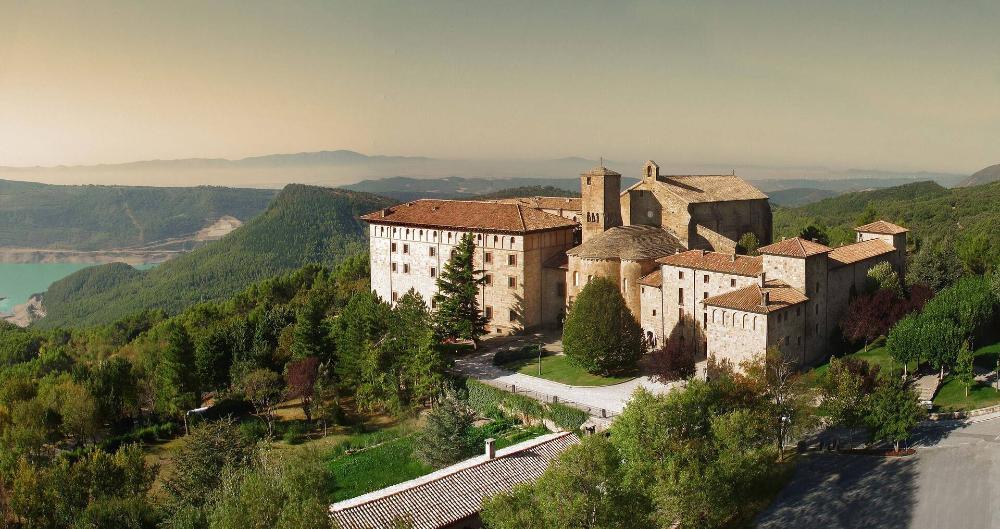
10 Hidden Monasteries and Convents for a Spiritual Escape in Spain
No religious affiliation required. Just a willingness to slow down, shut up, and let the silence do its work.
Let’s be honest: you’re tired.
Not sleepy-tired. Soul-tired. The kind of exhaustion that another beach vacation won’t fix. The kind where your brain feels like 47 browser tabs running simultaneously, and the idea of “relaxing” by scrolling your phone on a sunbed makes you want to scream into the void.
What if the antidote isn’t more stimulation, but less? What if the cure is stone walls built eight centuries ago, monks who haven’t spoken in decades, and the kind of quiet that makes you realize you’ve forgotten what silence actually sounds like?
Spain has over 900 monasteries and convents — many still active, many offering accommodation to visitors regardless of faith. Some are architectural masterpieces. Some sit in locations so beautiful they feel like divine real estate decisions. And almost all of them cost less per night than a mediocre city hotel.
This isn’t about religion. It’s about reset. Here’s where to find it.
1. Monasterio de Santo Domingo de Silos — Where Gregorian Chant Went Platinum
No, really. In 1994, the monks of Silos released an album of Gregorian chant that sold six million copies and hit the Billboard charts. These Benedictine brothers became accidental rockstars — while maintaining their vows of humility, prayer, and a lifestyle unchanged since the 11th century.
The monastery itself, in the remote hills of Burgos province, is worth the pilgrimage for the Romanesque cloister alone: double-columned galleries, carved capitals depicting biblical scenes, and a 1,000-year-old cypress tree growing in the courtyard. But the real draw is attending Vespers or Compline, when the monks’ voices fill the church with sound that vibrates somewhere deep in your chest.
Staying there: The guesthouse accepts men only (sorry, patriarchy) for stays of 2-7 days. Suggested donation around €35/night including meals. Women can visit the church and cloister during regular hours.
Getting there: About 1 hour south of Burgos. No public transport — you’ll need a car.
Don’t miss: The 7pm Vespers service. Arrive early. Sit near the front. Let go.
2. Monasterio de Leyre — The Crypt That Predates Almost Everything
Tucked into the foothills of the Navarran Pyrenees, Leyre is one of Spain’s oldest monastic sites — and its Romanesque crypt is genuinely one of the most atmospheric spaces in the country. Squat columns, rough-hewn stone, dim light filtering through tiny windows. It feels less like a building than a cave that learned to pray.
The monastery above has been rebuilt and restored over centuries, but the crypt remains essentially unchanged since the 11th century. Cistercian monks still live here, maintaining the liturgical schedule and welcoming guests who want to join their rhythm of prayer, work, and silence.
Accommodation: The hospedería (guesthouse) is open to everyone — men, women, couples, families. Rooms are simple but comfortable, around €50-70/night with meals. Book directly through their website.
Bonus: The monastery produces its own wine, honey, and cheese. You can buy them at the small shop. The cheese is exceptional.
Location tip: Just 15 minutes from the stunning Foz de Lumbier gorge — combine spiritual escape with light hiking.
3. San Juan de la Peña — The Monastery Built Into a Cliff Face
Some monasteries impress with size. San Juan de la Peña impresses with audacity. This 10th-century complex is literally embedded beneath a massive rock overhang in the Aragonese Pyrenees — the cliff face serves as the church’s roof. It’s half architecture, half geology, entirely jaw-dropping.
The setting wasn’t just dramatic; it was strategic. Legend holds that this monastery sheltered the Holy Grail (one of several Spanish claimants) and served as the spiritual heart of the early Aragonese kingdom. Kings were buried here. The cloister’s carved capitals rank among Spain’s finest Romanesque sculpture.
Visiting: San Juan de la Peña is a museum/monument, not an active monastery — there’s no overnight stay. But it’s an essential day trip for anyone interested in Spain’s spiritual heritage. Entry around €7, with a combined ticket for the old and new monastery buildings.
Getting there: About 25km from Jaca, accessible by car. The mountain road is scenic but winding.
Best time: Early morning, before tour groups arrive. The light through the forest is magical.
4. Monasterio de Oseira — Galicia’s “Escorial” Hidden in the Hills
While tourists flock to Santiago de Compostela, one of Spain’s largest and most impressive monasteries sits almost empty just 90 minutes inland. Oseira — nicknamed the “Galician Escorial” — is a massive Cistercian complex that’s been continuously occupied since the 12th century.
The scale is staggering: three cloisters, a church that could swallow most cathedrals, and a Baroque staircase that architects travel specifically to see. Yet on most days, you might be the only visitor. The small community of Trappist monks maintains the property and welcomes guests seeking silence and reflection.
Staying there: The guesthouse is open to all. Expect bare-bones accommodation (this is Trappist hospitality, not a hotel) at very low cost — donations of €20-30/night are typical. Meals with the community. Limited availability; contact well in advance.
Reality check: This is serious retreat territory. No WiFi in rooms. No entertainment. Just prayer, meals, and your own thoughts. That’s the point.
5. Monasterio de Poblet — The Cistercian Giant That Still Lives
Poblet is one of the largest Cistercian monasteries in the world, a UNESCO World Heritage site, and the burial place of Aragonese kings. It’s also — unlike most medieval monastery museums — still fully active. Monks live here, pray here, and welcome visitors who want more than a photo op.
The complex is enormous: fortified walls, a royal palace wing, cloisters stacked like nesting boxes, and a church whose austerity is somehow more impressive than any gilded cathedral. Cistercian architecture strips everything to essence. What remains is proportion, light, and stone so perfectly cut it looks soft.
Visiting vs. staying: Day visits are easy (€9 entry, guided tours available). But the hospedería accepts overnight guests seeking retreat — simple rooms, shared meals, and access to monastic services. Around €45-60/night.
Location: In Catalonia’s Conca de Barberà wine region, about 1.5 hours from Barcelona. Combine with wine tasting if spiritual immersion needs a earthly chaser.
6. Convento de San Esteban, Salamanca — Dominican Grandeur Off the Main Plaza
Salamanca’s Plaza Mayor gets all the attention, but five minutes’ walk away stands one of Spain’s most spectacular Renaissance facades — and barely anyone goes inside. The Convento de San Esteban is a Dominican masterhouse with a church front so intricately carved it looks like stone lace.
Inside: a soaring Gothic-Renaissance church, a two-level cloister that might be Spain’s most beautiful, and a chapter house where Columbus reportedly pitched his voyage to skeptical theologians. The Dominican community still runs the place, offering both tours and limited retreat accommodation.
Visiting: Open to tourists daily, around €4 entry. The cloister alone is worth triple that.
Staying: The attached hospedería offers rooms to guests seeking quiet reflection. Not the cheapest option in Salamanca (around €60-80/night), but the setting is unmatched.
Insider move: Attend evening prayers in the church. The acoustics turn everything into a cathedral-grade experience.
7. Monasterio de El Paular — The Retreat an Hour From Madrid
Here’s a secret for anyone trapped in the Spanish capital: one of the country’s finest monasteries sits just 60 kilometers north, in the pine forests of the Sierra de Guadarrama. El Paular was founded in 1390 as a Carthusian charterhouse and spent centuries as one of Spain’s wealthiest religious institutions. Then came dissolution, abandonment, and near-ruin.
Today, Benedictine monks have revived the community, and the monastery operates as both a spiritual retreat and a (surprisingly good) hotel. Yes, you can sleep in a restored monastic cell, eat in the refectory, and wander cloisters that most Madrileños have never seen — all while being close enough to catch a late train back to Atocha.
Accommodation: The Sheraton operates a hotel in one wing (around €120/night), while the monastery hospedería offers simpler rooms with optional participation in monastic life (around €50/night). Very different vibes; choose accordingly.
Don’t skip: The church’s massive altarpiece and the Vicente Carducho painting series in the chapter houses.
8. Monasterio de Veruela — Where Bécquer Found His Gothic Muse
The Romantic poet Gustavo Adolfo Bécquer spent time at Veruela in the 1860s, recovering from illness and soaking up the atmosphere that would infuse his most famous Leyendas. Two centuries later, the vibe remains: slightly melancholy, deeply beautiful, and shot through with that particular Spanish Gothic feeling that’s hard to name but impossible to miss.
Veruela, near Tarazona in Aragón, is a Cistercian complex that’s been monastery, military barracks, and near-ruin across its 850 years. The church is massive. The cloister is textbook Cistercian elegance. And the surrounding countryside — rolling vineyards producing excellent Garnacha — offers perfect post-contemplation rewards.
Visiting: Now a museum and cultural center, open daily. Entry around €3. No overnight stays in the monastery itself, but nearby villages offer accommodation.
Wine connection: The Campo de Borja wine region surrounds Veruela. Monasteries and viticulture have always been intertwined in Spain — the monks knew what they were doing.
9. Convento de la Rábida — Where the Americas Were Dreamed Into Being
On a pine-covered hill above the confluence of the Tinto and Odiel rivers, a small Franciscan convent changed world history. It was here that Columbus found shelter, support, and the connections that would eventually secure royal backing for his voyage. The monks of La Rábida believed in him when almost no one else did.
The convent itself is modest — white walls, simple cloisters, a small church. But the weight of what happened here is immense. You can visit the room where Columbus stayed, see the murals depicting his journey, and walk the grounds where one of history’s most consequential decisions took shape.
Visiting: Open daily, entry around €4. Guided tours explain the Columbus connection in detail.
Staying: The Franciscans no longer offer accommodation, but the nearby town of Palos de la Frontera has options. The whole “Lugares Colombinos” (Columbus sites) area makes a fascinating day trip from Seville.
Mood: More historically significant than spiritually immersive, but powerful nonetheless.
10. Monasterio de Suso y Yuso — Where the Spanish Language Was Born
We’ll end with something unexpected: the birthplace of written Spanish. In the 10th century, a monk at the Monasterio de Suso scribbled notes in the margins of a Latin text — not in Latin, but in the vernacular language that would become Castilian Spanish. Those Glosas Emilianenses are among the earliest written records of the Spanish language.
The monastery complex is actually two sites: Suso (the “upper” monastery) is the ancient original, with Visigothic and Mozarabic elements dating to the 6th century. Yuso (the “lower” monastery) is the massive Renaissance replacement built when Suso became too small. Together, they’re a UNESCO World Heritage site — and somehow, still relatively unknown outside Spain.
Visiting: Suso requires guided tours (book ahead through the La Rioja tourism website). Yuso is open for general visits. Combined tickets around €8.
Staying: Yuso’s hospedería is one of Spain’s finest monastery hotels — beautifully restored rooms, excellent restaurant, and the kind of silence that €150/night rarely buys elsewhere.
Location: Near San Millán de la Cogolla in La Rioja. Combine with wine country touring — the monasteries are surrounded by vineyards.
A Note on Monastery Etiquette
You don’t have to be religious to stay in these places. But you do have to be respectful. A few things to keep in mind:
Silence matters. Many monasteries observe strict quiet hours. This isn’t a suggestion. Turn off your phone. Lower your voice. Embrace the discomfort of having nothing to distract you.
Participate or don’t — but don’t disrupt. If you attend services, follow the lead of others. Stand when they stand. Sit when they sit. You don’t have to pray, but don’t treat it as a performance for your entertainment.
Dress appropriately. Shoulders and knees covered, generally. This isn’t a beach town.
Expect simplicity. Monastic hospitality is generous but basic. Rooms are clean, beds are hard, walls are bare. That’s intentional. Luxury is not the point.
Leave a donation. Even when stays are free or “by donation,” leaving nothing is poor form. These communities survive on generosity. €30-50/night is appropriate for most hospederías.
The Real Hidden Benefit
Here’s what nobody tells you about monastery stays: the boredom is the point.
For the first day, you’ll feel restless. You’ll reach for your phone. You’ll wonder what you’re missing. You’ll think this was a terrible idea.
Then something shifts. The silence stops feeling empty and starts feeling full. Your thoughts slow down. You notice things — the quality of light through stone windows, the texture of bread at breakfast, the weight of your own breathing.
You won’t come back from a monastery stay with photos that impress anyone. You won’t have stories about wild nights or incredible meals or adventures. You’ll come back with something harder to describe and more valuable: a few days when you stopped performing your life and simply lived it.
That’s the spiritual escape. It’s not about God (unless you want it to be). It’s about remembering that you exist even when no one’s watching.
Have you stayed at a monastery or convent in Spain? Which ones should we add to the list? Share your experiences — the good, the transcendent, and the unexpectedly weird.


