Spain’s Most Atmospheric Food Markets That Feed Your Soul
Spanish markets aren’t just places to buy groceries—they’re living theaters of color, chaos, and culinary wonder.
These sensory overload zones have been feeding locals for centuries, and they’re ready to feed you too.
1. La Boqueria, Barcelona
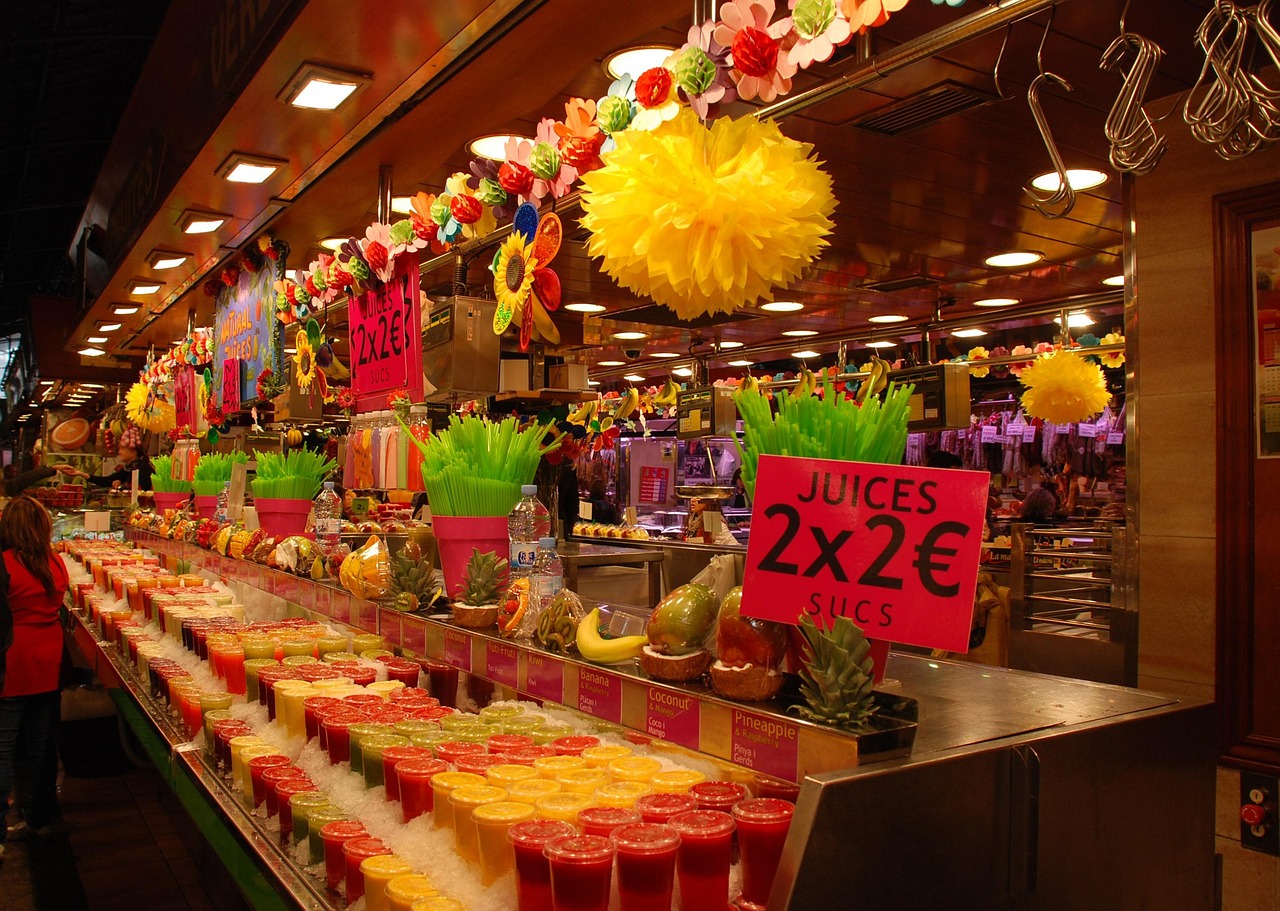
This legendary market has occupied its spot off La Rambla since 1217, making it one of Europe’s oldest continuously operating food markets.
Over 300 stalls burst with everything from glistening seafood pyramids to rainbow towers of tropical fruit.
The modernista iron-and-glass structure dates to 1914, designed by architect Josep Mas i Vila to let Barcelona’s famous light flood the produce.
Arrive before 9am to beat the crowds and catch chefs from the city’s best restaurants selecting their daily ingredients.
El Quim’s counter serves the market’s most famous dish: deep-fried eggs topped with impossibly tender baby squid.
2. Mercado Central, Valencia
Europe’s largest fresh food market sprawls across 8,000 square meters of Art Nouveau splendor with over 1,000 stalls.
The building itself steals the show with stained glass windows, colorful mosaics, and massive central domes supported by ornate iron fixtures.
Valencia’s famous oranges, tiger nut horchata, and paella ingredients all find their way here each morning.
The market sits in the heart of the Ciutat Vella, making it the perfect pit stop while exploring the old town.
3. Mercado de la Ribera, Bilbao
At 10,000 square meters, this Art Deco beauty along the Nervión River holds the title of Europe’s largest indoor municipal market.
The 1930s building houses about 60 produce stalls where you’ll find the freshest Basque meats, fish, and farmhouse cheeses.
Thursday evenings transform the space into a pintxo paradise with live jazz floating through the historic halls.
It’s just a five-minute walk from both the Old Town and the Guggenheim’s titanium curves.
4. Mercado de San Miguel, Madrid
This elegant iron-and-glass structure built in 1916 was revived as a gourmet food hall in 2009, and madrileños haven’t stopped coming since.
Over 30 upscale stalls serve everything from Manchego cheese and jamón ibérico to fresh oysters and craft vermouth.
The location couldn’t be more central—it’s literally steps from Plaza Mayor in the heart of historic Madrid.
Late hours (until midnight on weekdays, 1am on weekends) make it perfect for tapas-hopping between stalls.
5. Mercado de Abastos, Santiago de Compostela
Galicia’s seafood temple is the second most-visited attraction in Santiago after the famous cathedral.
Percebes (goose barnacles), massive prawns, spider crabs, and just-caught octopus fill the fish counters each morning.
The market bar will cook your purchases on the spot so you can eat the freshest possible seafood in Spain’s northwest corner.
Pilgrims finishing the Camino de Santiago have been celebrating with market feasts here since the late 19th century.
6. Mercado de Triana, Seville
This 105-year-old market in Seville’s bohemian Triana district was built directly atop the ruins of the Castle of San Jorge.
The Andalusian capital’s best jamón ibérico, chorizo, and local sherry all parade through these historic stalls.
Tapas was born in Seville, and this market’s counters serve some of the most authentic versions you’ll find anywhere.
Underground archaeological remains of the medieval castle are visible through glass floors in certain sections.
7. Mercat de Santa Caterina, Barcelona
This neighborhood market in the trendy Born district flies under the tourist radar while delivering serious local character.
The spectacular wavy roof designed by architect Enric Miralles explodes with 325,000 ceramic tiles in colors meant to represent the vibrant produce below.
Prices run cheaper than La Boqueria, and the crowds stay thinner—exactly how Barcelona locals like it.
The market was built atop ruins of a 13th-century convent, with archaeological remains visible through the floor.