Spain’s Most Dramatic Mountain Passes You Can Actually Drive
If you think Spain is all about beaches and sangria, you clearly haven’t white-knuckled your way through its mountain passes.
This country has some of the most jaw-dropping, hairpin-packed, vertigo-inducing roads in all of Europe—and the best part is you don’t need a helicopter or climbing gear to experience them.
Just a rental car, nerves of steel, and maybe a motion sickness pill for your passengers.
From the legendary snake road of Mallorca to the towering Pyrenean passes that separate nations, Spain’s mountain roads deliver the kind of adrenaline rush that flat highways simply cannot match.
These aren’t just routes to get somewhere—they’re destinations in themselves.
Ready to leave the coastal crowds behind and discover Spain from above?
1. Sa Calobra Road (MA-2141), Mallorca
This is it—the most famous road in all of Spain, and possibly one of the most photographed stretches of tarmac on Earth.
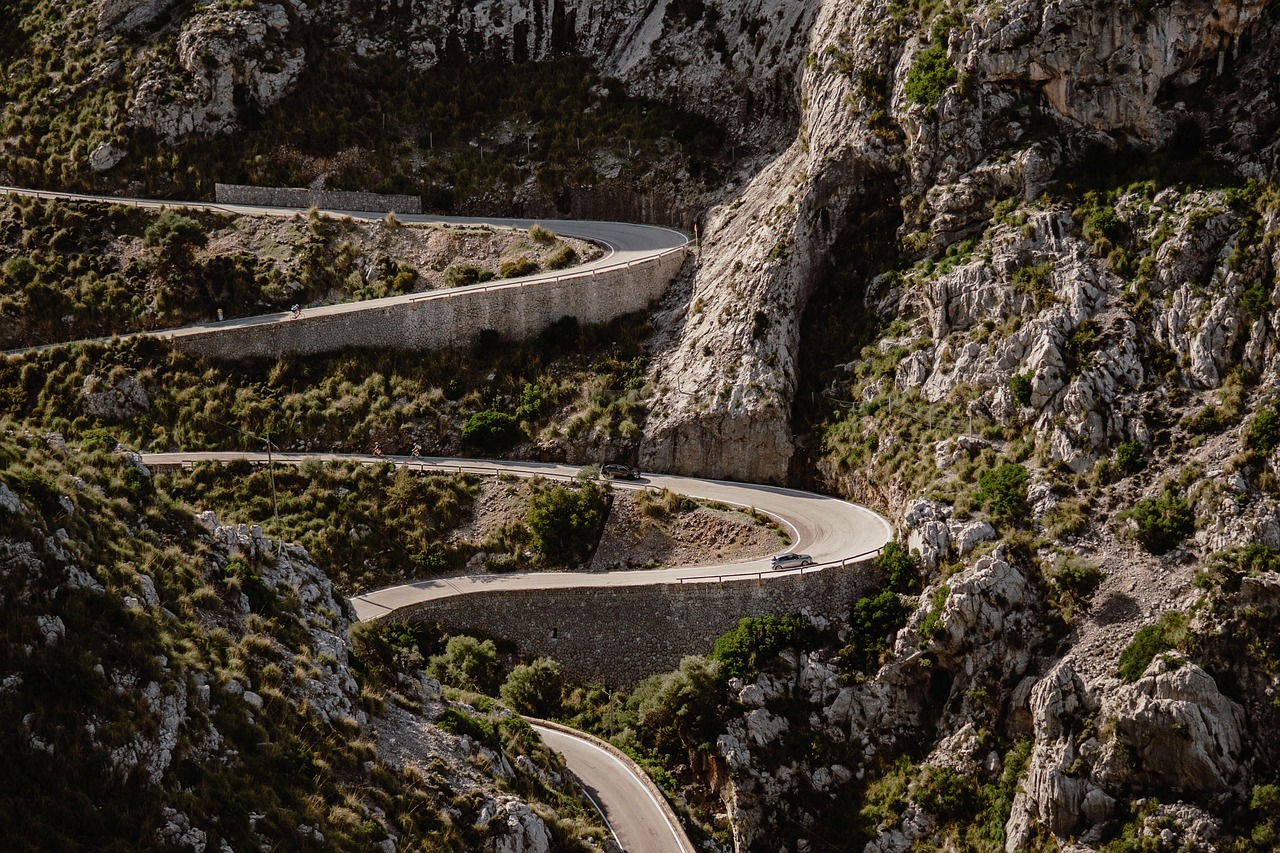
The Sa Calobra road, also known as the “Snake Road,” drops from 682 meters above sea level through 26 dizzying hairpin bends in just 12 kilometers.
Designed by engineer Antonio Parietti Coll in the 1930s and built entirely by hand, this masterpiece was constructed specifically to avoid using tunnels.
The result is a serpentine marvel that twists through the Serra de Tramuntana mountains like wet spaghetti dropped on the floor.
The most iconic feature is the Nus de Sa Corbata—literally “the tie knot”—a 270-degree spiral where the road actually passes underneath itself.
Cyclists worship this climb as a rite of passage, but drivers will appreciate the stunning views at every heart-stopping turn.
At the bottom, you’ll find the tiny village of Sa Calobra and access to a secret beach through hand-carved tunnels—the perfect reward for conquering the snake.
2. Puerto de San Glorio, Picos de Europa
At 1,604 meters above sea level, this mountain pass cuts through the very heart of Spain’s most dramatic national park.
The N-621 road stretches 36.8 kilometers between Portilla de la Reina in León and Potes in Cantabria, weaving through some of the most spectacular limestone scenery in Europe.
This isn’t just any mountain pass—it’s a regular feature in the Vuelta a España, the cycling race that sends professional riders gasping up its relentless grades.
At the summit, a parking lot and side road lead to the Collado de Llesba viewpoint, where you’ll find a stone sculpture of the Cantabrian brown bear—a reminder that you’re in seriously wild country.
The Picos de Europa mountains tower on all sides, with jagged peaks that earned the range its poetic name from sailors who used them as the first landmark when returning from the Americas.
If you’re lucky, you might spot chamois grazing on impossibly steep slopes or golden eagles circling overhead.
3. Desfiladero de La Hermida Gorge Road, Cantabria
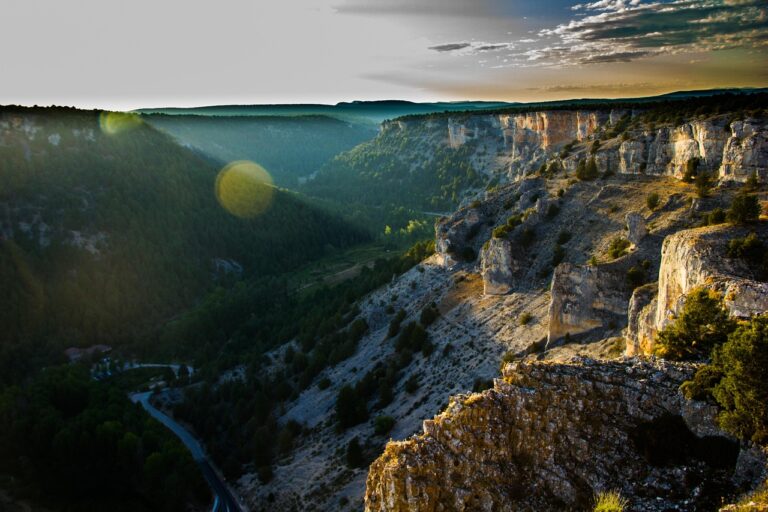
Imagine driving through a crack in the Earth where 600-meter walls of rock rise straight up on both sides.
That’s the Hermida Gorge, a 21-kilometer-long canyon carved by the Deva River through the Eastern Massif of the Picos de Europa.
The N-621 road threads through this geological wonder, hugging the riverbank as sheer limestone cliffs block out the sun.
French mountaineer Paul Labrouche famously compared it to the world’s most spectacular gorges, calling it steeper and more impressive than all of them.
In midsummer, a strange phenomenon occurs—hot winds funnel through the narrow canyon, feeling like a massive hair dryer blasting through your car windows.
The sky becomes a narrow blue strip far above, and you’ll understand why this route was considered one of Spain’s most challenging engineering feats when it was first constructed.
Stop at the tiny hamlet of Urdón to explore the gorge on foot via dramatic walking paths carved into the cliff faces.
4. Coll dels Reis Road, Mallorca
Most tourists taking the Sa Calobra road don’t realize they’re actually driving two spectacular passes in one.
The Coll dels Reis is the mountain pass at the top, reaching 682 meters, where the views stretch across the entire Serra de Tramuntana to the Mediterranean Sea below.
From here, you can see the entire serpentine descent of Sa Calobra laid out beneath you like a topographical map come to life.
The ascent from the MA-10 road features countless viewpoints where you can pull over and contemplate the sheer audacity of building a road through such terrain.
Early morning is the magic hour here, when mist fills the valleys and the sunrise paints the limestone cliffs in shades of gold and pink.
Photographers stake out positions along the road before dawn, and you’ll understand why when you see the light.
Pro tip: Stop at the small food stall near the summit for snacks and the best panoramic views before beginning your descent.
5. Desfiladero de los Beyos, Asturias/León
If the Hermida Gorge is spectacular, the Beyos Gorge is its wilder, less-visited cousin.
This deep canyon links the Picos de Europa with the Riaño area of León, following the course of the Sella River through some of the most pristine wilderness in northern Spain.
The road twists between towering rock walls that seem to close in from both sides, with the river churning below in a constant display of natural force.
There are moments driving through here when the sky nearly disappears, replaced by a narrow ribbon of blue framed by ancient stone.
Wildlife is abundant—keep your eyes peeled for griffon vultures riding the thermals above the gorge and chamois picking their way across impossible cliff faces.
The small town of Riaño at the eastern end sits on a plateau above a turquoise reservoir, offering a mystical view of mountains rising straight from the water like something from a fantasy film.
6. Puerto del Pontón, León/Asturias
At 1,280 meters, this pass connects the province of León with Asturias via the legendary N-625 road through the Sella Gorge.
The drive is regularly cited as one of the most beautiful in all of Spain, combining high mountain scenery with dramatic river canyons.
A stone plaque mounted on the Vidosa Bridge quotes French scientist Paul Labrouche comparing this gorge favorably to the most famous canyons on Earth.
The engineering achievement of carving this road through solid rock in the early 20th century was considered so remarkable that it became the stuff of legend.
Today, the route provides access to some of the best hiking in the Picos de Europa, including trails leading to the famous Ruta del Cares.
Expect sweeping vistas, stomach-churning drops, and the constant companionship of the Sella River far below.
7. Port de la Bonaigua, Catalan Pyrenees
At 2,072 meters, this is one of the highest drivable passes in the Pyrenees, connecting the Aran Valley with the rest of Catalonia.
The views from the top are genuinely breathtaking—360 degrees of High Pyrenean peaks stretching toward France in one direction and deeper into Spain in the other.
Snow lingers on these heights well into late spring, and the road is sometimes closed in winter, adding to the sense of adventure when conditions allow passage.
The descent into the Val d’Aran reveals one of Spain’s most culturally distinct regions, where locals speak Aranese—a variant of Occitan—and the architecture features distinctive slate roofs found nowhere else in the country.
Alpine meadows carpet the mountainsides in summer, dotted with wildflowers and grazing cattle wearing traditional bells.
This pass feels like driving into another country, which in many ways, you are.
8. Carretera de Formentor (Ma-2210), Mallorca
If Sa Calobra is the king of Mallorcan mountain roads, the road to Cap de Formentor is the queen.
Also designed by Antonio Parietti Coll, this route winds from Port de Pollença to the lighthouse at Mallorca’s most northerly point.
The views are nothing short of extraordinary—sheer cliffs dropping hundreds of meters to turquoise waters, with the island of Menorca visible on clear days.
El Mirador Es Colomer, a cliff-edge viewpoint about halfway along, offers one of the most photographed panoramas in all of the Balearic Islands.
The road features elegant curves rather than tight hairpins, making it popular with sports car enthusiasts and motorcycle riders seeking that perfect driving experience.
Arrive early morning or late afternoon to avoid the tour buses—this secret got out long ago, but the views remain absolutely worth the crowds.
9. Puerto de Ibañeta, Navarra
At 1,063 meters, this pass holds a special place in European history—it’s where the rearguard of Charlemagne’s army was ambushed in 778 AD, an event immortalized in the epic poem “Song of Roland.”
Today, the N-135 road carries pilgrims walking the Camino de Santiago, but drivers can experience the same dramatic mountain crossing that has been used for over a thousand years.
The pass marks the border between France and Spain, with dense beech forests giving way to the green hills of Navarra on the descent.
A small chapel and a monument to Roland stand at the summit, reminders of the pass’s military and spiritual significance.
The French side descends through postcard-perfect villages like Saint-Jean-Pied-de-Port, while the Spanish side leads toward Pamplona and the famous San Fermín festival.
History, scenery, and a genuine sense of crossing between worlds make this pass unforgettable.
10. Cañón del Añisclo Road, Aragón
Deep within the Ordesa y Monte Perdido National Park lies one of Spain’s most spectacular—and terrifying—canyon drives.
The road into Añisclo Canyon plunges into a gorge over a kilometer deep, with walls of limestone rising on both sides like the ramparts of an ancient fortress.
During certain periods of the year, the narrow road operates as one-way only, which should give you some idea of the conditions involved.
The canyon was carved by the Bellós River over millions of years, creating a microclimate where unique flora thrives on the moist canyon walls.
Waterfalls cascade down the cliffs after rainfall, and the light filtering into the depths creates an almost otherworldly atmosphere.
This isn’t a drive for the faint-hearted, but for those seeking Spain’s most dramatic natural scenery from behind the wheel, Añisclo delivers like nowhere else.