Spain Has Over 2,500 Castles—These 12 Are the Ones That Will Stop You Cold
You know that moment when you round a corner and your brain just… stops?
That’s what happens in Spain. Repeatedly. Because apparently, this country decided to just casually scatter over 2,500 castles across its landscape like confetti at a medieval wedding. We’re talking turrets that pierce the clouds, pink brick fortresses that glow at sunset, and clifftop citadels so dramatic they’ve literally been used as Game of Thrones filming locations.
Forget the crowded Colosseum or yet another photo of the Eiffel Tower. Spain’s castles are where the real magic happens—and most tourists haven’t caught on yet. I’m talking €3 entry fees, empty battlements, and the kind of views that make your phone camera weep with joy.
Ready to feel like you’ve stepped into a storybook? Grab your most comfortable walking shoes. Here are 12 Spanish castles that deserve a spot on your bucket list immediately.
1. Alcázar of Segovia — The OG Disney Castle
Yes, the rumours are true. This 12th-century fortress allegedly inspired Walt Disney when designing Cinderella’s castle. And honestly? One look at those iconic turrets rising above the Castilian plains and you’ll understand why.
Perched on a rocky crag where two rivers meet, the Alcázar looks like someone asked a child to draw their dream castle and then actually built it. The conical slate roofs, the ornamental towers, the impossibly romantic silhouette against the Sierra de Guadarrama mountains—it’s almost too perfect.
Practical stuff:
- Entry: Around €9 for the full ticket (palace, museum, and tower climb). EU citizens can enter free on non-festive Tuesdays from 2-4pm.
- The tower: 152 narrow spiral steps up the Torre de Juan II. Claustrophobes, be warned. Everyone else, the panoramic views are chef’s kiss.
- Getting there: Just 30 minutes by high-speed train from Madrid Chamartín station, making it an easy day trip.
- Pro tip: Arrive early morning or late afternoon. Midday tour groups can turn the interior into a sardine can.
Fun fact: Queen Isabella I was crowned here in 1474, and the castle has never been conquered in battle. That’s some serious fairy tale energy.
2. Alhambra, Granada — The Moorish Dream That Never Ends
Calling the Alhambra just a “castle” feels almost insulting. This sprawling palace-fortress complex is more like an entire universe, dripping with intricate Islamic geometry, impossibly serene courtyards, and gardens that could make the Garden of Eden jealous.
The Nasrid Palaces are the showstopper—think honeycomb ceilings, fountains that whisper secrets, and the famous Court of the Lions that’s somehow both grand and intimate. It’s the kind of place where you’ll spend four hours and swear only 20 minutes passed.
Practical stuff:
- Entry: €21 for the general daytime ticket (Nasrid Palaces + Generalife + Alcazaba). Book 2-3 months ahead—tickets sell out fast.
- Critical: Your Nasrid Palaces entry time is strict. Miss it by even a few minutes and you’re out of luck.
- Best strategy: Book the earliest morning slot. The light is gorgeous, the crowds thinner, and you’ll beat the afternoon heat.
- Pro tip: If general tickets are sold out, check for “Dobla de Oro” tickets (€8 extra, includes Andalusian monuments) or night visits.
Insider angle: The Charles V Palace and Alhambra Museum are actually free—no ticket needed. Go for the Islamic art collection.
3. Royal Palace of Olite — The Most Underrated Castle in Spain
Here’s a secret most tourists don’t know: a 15th-century German traveller once wrote that he was certain “no king has a more beautiful palace with so many golden rooms.” That traveller was describing Olite—and it’s still largely overlooked today.
This Gothic stunner in Navarra was built for pleasure, not war. We’re talking hanging gardens, exotic animal zoos (yes, they kept lions), and 365 rooms—one for each day of the year. The current structure is beautifully restored, and wandering through its maze of towers, galleries, and courtyards feels like exploring a very elegant labyrinth.
Practical stuff:
- Entry: Just €4.90 for a self-guided tour. Guided tours available for a bit more.
- The Parador: Part of the castle complex is now a luxury hotel. Splurge on a night if you can—waking up inside a medieval palace is something else.
- Getting there: 40 minutes south of Pamplona by car.
- Pro tip: Visit during the Medieval Festival in August when the entire town transforms into the Middle Ages.
Fun fact: The adjacent Old Palace is now a Parador hotel. You can literally sleep where Navarrese kings once did.
4. Loarre Castle, Huesca — Hollywood’s Favourite Spanish Castle
When Ridley Scott needed a fortress for Kingdom of Heaven, he chose Loarre. When “The Ministry of Time” needed medieval authenticity, they chose Loarre. Sensing a pattern?
Perched over 1,000 metres up in the foothills of the Pyrenees, this 11th-century Romanesque fortress is considered the best-preserved of its kind in all of Europe. The views alone—sweeping across the Hoya de Huesca plains—are worth the winding drive up.
Practical stuff:
- Entry: Around €6-8 depending on whether you want a guided tour (highly recommended).
- Hours: Winter 11am-5:30pm; summer 10am-8pm. Closed Mondays except holidays.
- Getting there: About 30km from Huesca city. You’ll need a car—the winding mountain road is half the experience.
- Pro tip: The acoustics in the Crypt of Santa Quiteria are hauntingly beautiful. Whisper something and be amazed.
Legend has it: A ghostly “maid of Loarre” walks the battlements at midnight every Tuesday. Sleep tight.
5. Real Alcázar of Seville — Where Game of Thrones Met One Thousand and One Nights
While the Alhambra gets all the attention, Seville’s Royal Alcázar quietly holds its own as one of the most stunning palace complexes in Europe. Those Moorish arches? The kaleidoscopic ceramic tiles? The lush gardens where you expect a sultan to appear? Immaculate.
Oh, and it doubled as the Water Gardens of Dorne in Game of Thrones. So there’s that.
Practical stuff:
- Entry: €15.50 for general admission. The Upper Royal Room (private royal apartments) is an extra €5.50 but worth it.
- Free entry: Mondays during the last hour before closing—but the queues are brutal.
- Pro tip: Book online to skip the ticket line, which can stretch for an hour in peak season.
Still-functioning fact: This remains the official Seville residence of the Spanish Royal Family. It’s the oldest royal palace still in use in Europe.
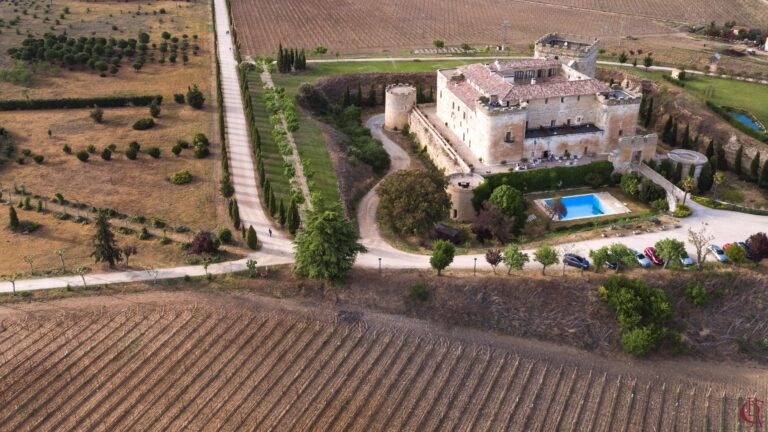
6. Coca Castle, Segovia — The Pink Castle That Shouldn’t Exist
Forget everything you think a castle should look like. Coca is built almost entirely of brick—and not just any brick, but salmon-pink Mudéjar brickwork so intricate it looks like lace carved into stone. It’s surreal, it’s gorgeous, and it’s unlike anything else in Spain.
The deep moat, the geometric patterns, the way the warm brick glows at golden hour—Coca doesn’t feel real. It feels like someone’s fever dream of what a Spanish castle could be.
Practical stuff:
- Entry: Just €3. Possibly the best €3 you’ll spend in Spain.
- Tours: Interior visits are guided only, with limited hours (typically 11am-1pm and 4pm-6pm). The ramparts can be walked for free anytime.
- Getting there: About 50km northwest of Segovia, easy to combine with a Segovia day trip.
- Pro tip: Lots of steep, narrow spiral stairs. Not ideal for mobility issues or small children.
Unexpected twist: The castle now houses a forestry training school. So yes, you can study among medieval battlements.
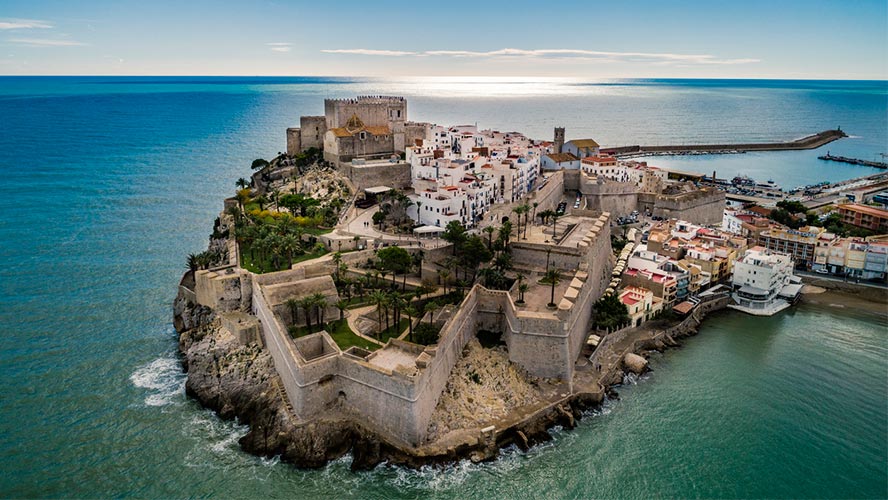
7. Peñíscola Castle — The Templar Fortress by the Sea
Imagine a medieval fortress rising from a rocky peninsula, the Mediterranean crashing against its ancient walls, with a charming white-washed old town cascading down to the beach below. That’s Peñíscola—and it’s every bit as dramatic as it sounds.
Built by the Knights Templar in the 12th century, this fortress later became the refuge of the “antipope” Benedict XIII, who holed up here after being excommunicated and refused to leave. The castle’s solid stone construction has barely changed since.
Practical stuff:
- Entry: Around €5. Includes access to the castle and its botanical gardens.
- Getting there: Halfway between Valencia and Tarragona, making it a perfect road trip stop.
- Best time: Early morning or sunset, when the light on those Mediterranean waters is unreal.
- Pro tip: Spend the day at the beach, then wander the castle and old town in the cooler evening hours.
Beach bonus: The town’s beaches are excellent. Pack your swimsuit and make it a full day.
8. Bellver Castle, Palma de Mallorca — The Circle in the Med
Here’s a weird one: Bellver is the only circular castle in Spain, and one of only a handful in all of Europe. Built in the 14th century as a summer residence for Mallorcan kings, it sits on a pine-covered hill with views that sweep across Palma, the bay, and the Tramuntana mountains.
The geometry is mesmerizing—a perfect circle with three towers plus a separate keep connected by a bridge. On summer evenings, the inner courtyard hosts classical music concerts that are pure magic.
Practical stuff:
- Entry: Around €4. Free on Sundays.
- Getting there: Just 3km from Palma’s centre. Easy by bus, taxi, or a scenic walk uphill.
- Inside: Houses Palma’s local history museum—actually quite interesting, even for non-history buffs.
- Pro tip: Check the summer concert calendar. There’s nothing quite like Bach bouncing off 14th-century stone.
Royal trivia: The castle served as a prison for centuries. Not exactly the fairy tale ending, but hey—it’s got character.
9. Almodóvar del Río Castle — Highgarden in Real Life
Yes, another Game of Thrones location. Yes, absolutely worth visiting anyway. This imposing hilltop fortress overlooking the Guadalquivir valley is what every medieval fantasy aspires to look like.
Originally an 8th-century Moorish stronghold, it was rebuilt in the 14th century and meticulously restored in the early 1900s. The result is castle-perfect—complete with crenellated walls, watchtowers, and dungeons you can actually explore.
Practical stuff:
- Entry: Around €9 for general admission. Themed tours (including a “Game of Thrones” option) available.
- Getting there: 22km from Córdoba, an easy 30-minute drive.
- Pro tip: Go at sunset. The light on the golden stone against the valley below is photography gold.
GoT fans: This was Highgarden, seat of House Tyrell. Yes, that Highgarden.
10. Castle of Manzanares el Real — Madrid’s Cinematic Fortress
Just 50km north of Madrid, in the shadow of the Sierra de Guadarrama mountains, sits what might be Spain’s best-preserved 15th-century castle. Manzanares el Real is the whole package: turrets, battlements, a stunning lakeside setting, and interiors you can actually visit.
The castle has starred in more Spanish films than any other, and walking through its tapestry-lined rooms, you’ll understand why directors keep coming back.
Practical stuff:
- Entry: Around €5. Guided dramatized tours available on weekends—highly entertaining.
- Getting there: Easy day trip from Madrid by bus (line 724 from Plaza de Castilla) or car.
- Combine with: The Santillana reservoir just below is beautiful for a post-castle picnic.
- Pro tip: Visit on a weekday for fewer crowds and a more atmospheric experience.
Location bonus: The surrounding area is prime hiking territory. Extend your visit with a walk in the Pedriza nature reserve.
11. Castle of Belmonte, Cuenca — The Medieval Time Capsule
Belmonte is the castle historians get excited about, because what you see is largely original. Built in the 15th century for a powerful marquis, it was abandoned for centuries, then restored with unusual care to preserve its authentic medieval character.
The triangular layout, the star-shaped keep, the Mudéjar coffered ceilings—it’s a masterclass in late medieval architecture. During the annual Medieval Combat World Championship (yes, that’s a real thing), knights in full armour actually fight here. Life imitating art imitating life.
Practical stuff:
- Entry: Around €9. Audio guides available in multiple languages.
- Getting there: About 150km southeast of Madrid. Best with a car.
- Pro tip: Visit during the Medieval Fair in summer for jousting demonstrations and costumed chaos.
Film credit: Scenes from El Cid (1961) were filmed here. Charlton Heston walked these halls.
12. La Calahorra Castle — The Renaissance Surprise
Saving the most unexpected for last. Approach La Calahorra from a distance and you’ll see a standard-issue medieval fortress sitting against the snow-capped Sierra Nevada. Get inside? Pure Italian Renaissance opulence.
This early 16th-century castle is considered Spain’s first significant Italian Renaissance building, complete with Carrara marble courtyards, Corinthian columns, and details so refined they feel transported from Florence. The contrast between the austere exterior and lavish interior is almost jarring.
Practical stuff:
- Entry: By appointment only (some Wednesdays), as it’s privately owned. Call +34 958 677 098—tours in Spanish only.
- Getting there: Between Granada and Guadix, about an hour from Granada city.
- Best time: Spring, when the Sierra Nevada is still snow-capped and the wildflowers are blooming.
- Pro tip: Even if you can’t get inside, the drive through the dramatic landscape and the exterior views are worth the detour.
Backstory: The original owner, an Andalusian marquis, lived here only eight years before moving elsewhere. Rich people problems.
The Bottom Line
Spain’s castles aren’t just historical monuments—they’re time machines. From Moorish pleasure palaces to brooding Templar fortresses, each one tells a different story of the diverse civilizations that shaped this country.
The best part? While tourists pile into overcrowded European capitals, these castles remain surprisingly accessible. We’re talking single-digit entry fees, minimal queues, and experiences that feel genuinely yours.
So here’s my challenge: Pick three from this list and build a road trip around them. Your inner kid—the one who believed in magic and drew castles in the margins of notebooks—will thank you.
Visited any of these? Drop your favourite in the comments. And if you’ve got a hidden-gem Spanish castle that didn’t make the list, spill the secrets—we’re all friends here. 🏰