There’s a Pink Lake in Spain That Will Short-Circuit Your Brain
You’ve seen Spain’s white villages, blue seas, and golden beaches — but what about a pink lagoon?
Yes, bright pink.
Like cotton candy met the Mediterranean.
Welcome to Las Salinas de Torrevieja, one of Spain’s most surreal natural wonders — a bubblegum-colored salt lake hidden on the Costa Blanca that most travelers somehow miss.
Quick Facts
📍 Location: Torrevieja, Alicante Province — about 45 minutes south of Alicante
🩷 Why it’s pink: Halobacteria and Dunaliella salina algae thrive in the salty water
🏊 Can you swim? No — it’s a protected natural area
📸 Best time to visit: Late spring through early autumn (April–October) for the most vivid pink
⏰ Best time of day: Late afternoon or golden hour — the colors become almost neon
Where to Find Spain’s Pink Lake
You’ll find the pink lagoon just outside the town of Torrevieja, about 45 minutes south of Alicante on the Costa Blanca.
It’s part of the Lagunas de la Mata y Torrevieja Natural Park, a protected saltwater ecosystem that’s home to flamingos, migratory birds, and — thanks to some serious science — one of the most photogenic landscapes in Spain.
The color isn’t edited or artificial.
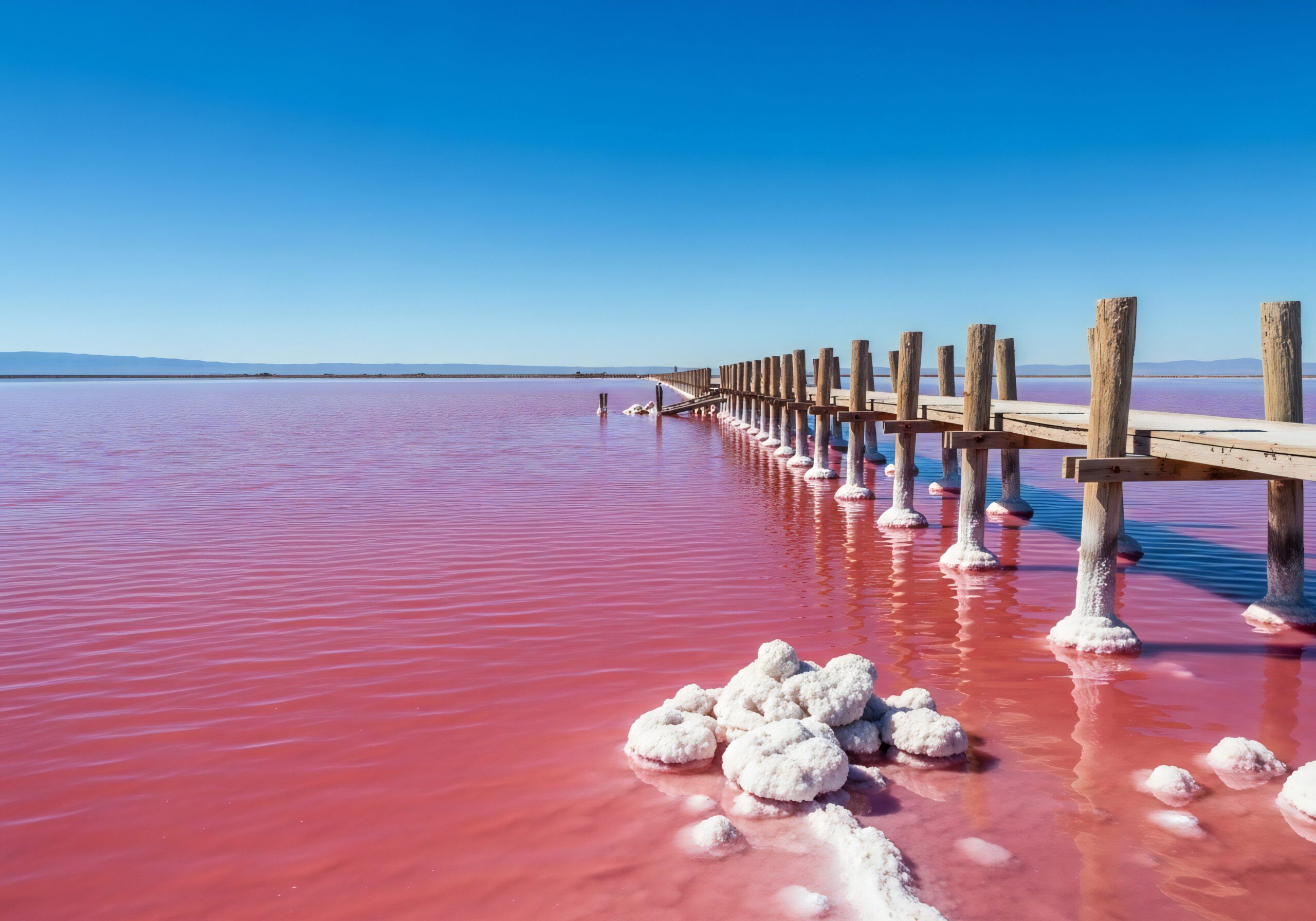
The lagoon’s rosy hue comes from tiny microorganisms — halobacteria and Dunaliella salina algae — that thrive in its salty, mineral-rich waters.
The higher the salt concentration, the deeper the pink gets.
On sunny days, it can look like liquid rose wine.
Why It’s Pink (The Science)
It’s all chemistry and nature’s flair for drama.
When the temperature rises and the salt levels increase, the algae and bacteria produce beta-carotene (the same pigment found in carrots), turning the water pink.
The effect changes throughout the day — soft blush tones in the morning, vivid magenta by sunset.
Pair that with the bright white salt crusts around the edges and the occasional flamingo gliding by, and you’ve got one of the most Instagrammable places in Spain.
The salt here has been harvested for centuries — the Romans extracted salt from these lagoons, and the tradition continues today.
Can You Swim in the Pink Lake?
Technically, no — swimming isn’t allowed because it’s a protected natural area.
But you can walk or bike around it on designated trails, stop at viewpoints, and soak up the surreal scenery.
The nearby Laguna de la Mata, its smaller blue sister lake, offers similar trails and excellent birdwatching spots.
Locals will tell you that years ago, people did swim here — claiming the salty water worked wonders for their skin — but these days, it’s strictly for looking, not lounging.
If you want to swim in unusual Spanish waters, check out our guide to Spain’s strange but stunning beaches — some are nearly as surreal.
When to Visit
Best Season
Late spring through early autumn (April–October) is when sunlight and heat intensify the pink tones.
The hotter and sunnier it is, the pinker the water gets.
Winter visits may show a paler, less dramatic color — or sometimes no pink at all.
Best Time of Day
Late afternoon or golden hour — the colors become almost neon when the sun hits at an angle.
Sunrise can also be beautiful for softer, pastel tones and fewer people.
Pro tip: Bring polarized sunglasses — the reflections are dazzling and can make it hard to see the true color without them.
How to Get There
From Alicante or Murcia, Torrevieja is easily reachable by car or bus.
Once in town, head to the Natural Park of the Lagoons of Torrevieja and La Mata.
There’s free parking nearby and several viewing points marked along the walking trails.
From Alicante: 45 minutes by car
From Murcia: 40 minutes by car
From Cartagena: 50 minutes by car
If you’re staying on the Costa Blanca, it’s an easy day trip from Alicante, Elche, or Cartagena.
Cartagena itself has one of Spain’s most beautiful Art Nouveau train stations — worth a stop.
What to Do at the Pink Lake
Walk or Bike the Trails
Several marked trails circle the lagoon and connect to the Laguna de la Mata.
The flat terrain makes it perfect for casual walks or cycling.
Spot Flamingos
Yes, flamingos live here — and they’re pink too, thanks to the same beta-carotene that colors the water.
Bring binoculars for the best views of these elegant birds filtering through the shallows.
Photography
The pink water against white salt, blue sky, and green vegetation makes for incredible photos.
The contrast is almost too vivid to believe.
Best angles: Look for viewpoints where the salt crust creates a white border around the pink water — the color contrast is most dramatic there.
Visit the Salt Harvesting Areas
The Salinas de Torrevieja is one of Europe’s largest salt-producing lakes.
You can sometimes see the harvesting operations in the distance — mountains of white salt piled next to pink water.
Combine With Nearby Attractions
Make a full day of your Costa Blanca trip:
- Alicante: Historic castle, beautiful old town, beach — about 45 minutes north
- Cartagena: Roman ruins, Art Nouveau architecture, harbor town — about 50 minutes south (see our Roman ruins guide)
- Elche: UNESCO-listed palm groves — about 30 minutes north
- Guardamar del Segura: Beautiful dune beaches — about 15 minutes north
Why You’ll Love It
Because it feels like a secret world — quiet, strange, and otherworldly.
A place where the earth and sky trade colors, where flamingos reflect in pink water, and where Spain shows off a side most travelers never see.
It’s proof that Spain isn’t just beaches and tapas — it’s full of surprises hiding in plain sight.
So next time you’re chasing sunsets on the Mediterranean, add one more stop: the pink lagoon that looks like a dream.
Plan Your Pink Lake Visit
Getting There
Where to Stay
Stay in Torrevieja to be close to the lagoon, or base yourself in Alicante for a wider range of options.
Travel Insurance
Exploring natural parks in the Spanish sun — stay covered.
Keep Exploring Spain’s Natural Wonders
Love the surreal?
Here’s more:
- 10 Epic Places in Spain That Look Too Wild to Be Real — More “is this real life?” moments
- Spain’s Strange But Stunning Beaches — Popcorn beaches and inland shores
- Spain’s Most Jaw-Dropping Canyons — Dramatic landscapes
- Spain’s Most Spectacular Roman Ruins — Nearby Cartagena has incredible ancient sites
- Underrated Places in Spain — More hidden gems
The Bottom Line
Spain’s pink lake is one of those places that makes you stop and stare.
It looks fake.
It looks filtered.
It looks like someone spilled a giant bottle of rose into the Mediterranean.
But it’s real — a natural phenomenon created by salt-loving microorganisms and centuries of sun.
And it’s waiting for you, just 45 minutes from Alicante, hiding in plain sight.
So go.
Walk the trails.
Watch the flamingos.
Take the photo no one will believe.
And remember: sometimes the most magical places aren’t in the guidebooks — they’re just off the highway, glowing pink in the afternoon sun.
Have you visited Spain’s pink lake?
Or discovered other surreal natural wonders in Spain?
Tell us in the comments.
Related Posts You’ll Love:
- 10 Epic Places in Spain That Look Too Wild to Be Real
- Spain’s Strange But Stunning Beaches
- Underrated Places in Spain
Bookmark this post — and don’t forget your polarized sunglasses.