Spain’s Most Moving Holy Week Processions That Give You Chills
Semana Santa transforms Spanish cities into open-air theaters of devotion that have played out the same way for centuries.
Whether you’re religious or not, the spectacle of candlelit processions, towering floats, and haunting saetas will raise every hair on your arms.
1. La Madrugá, Seville
The early hours between Maundy Thursday and Good Friday bring Seville’s most revered images into the streets—and 500,000 people crowd to witness them.
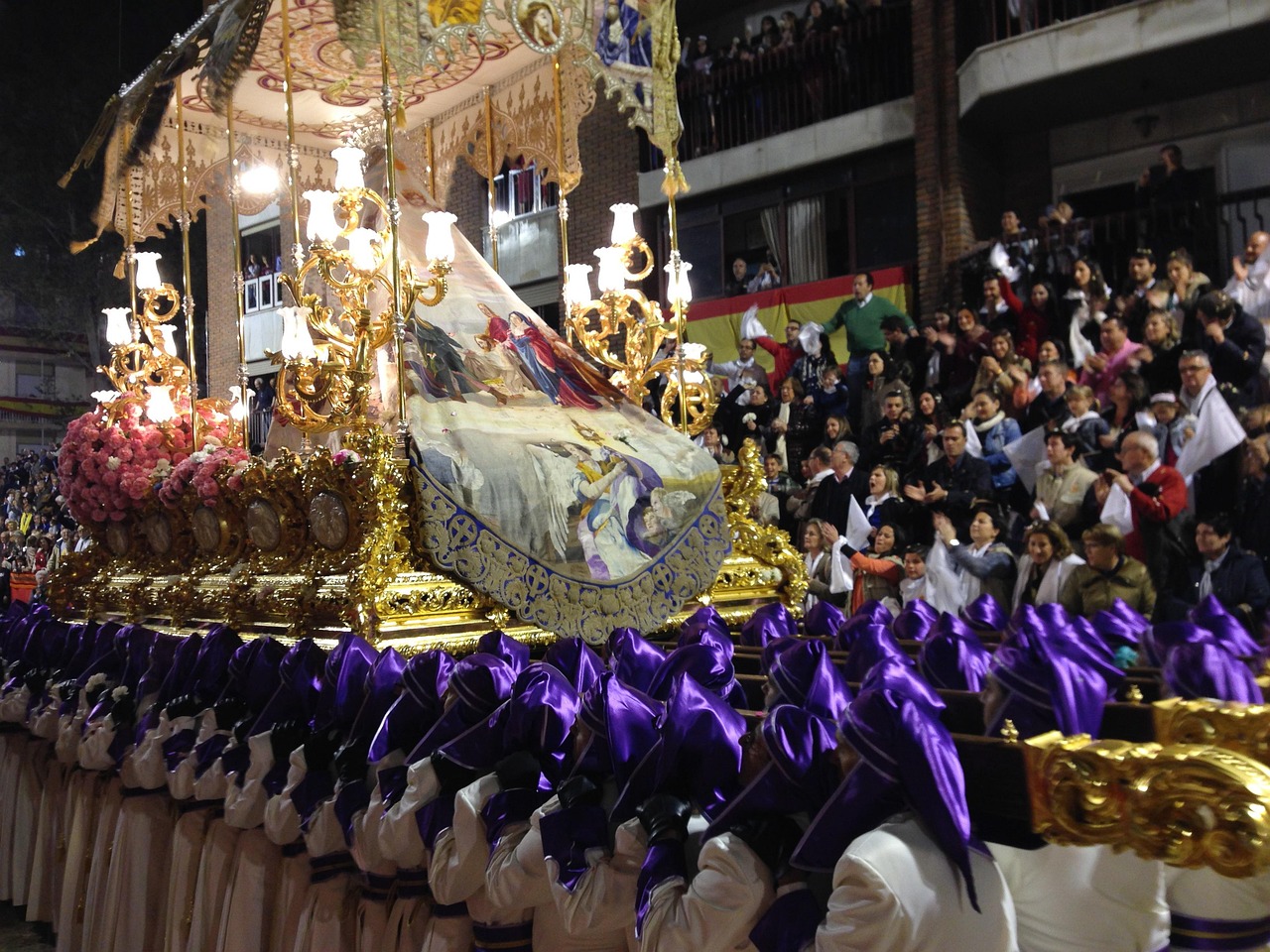
The Virgen de la Macarena and Esperanza de Triana emerge around 2am, their jeweled figures swaying on massive floats carried by hidden costaleros.
Spontaneous saetas—flamenco-style religious laments—pierce the silence from balconies as the processions pass.
The combination of incense, candlelight, and raw emotion creates something that transcends religious observance entirely.
Seville’s 60 brotherhoods process throughout Holy Week, but nothing matches the intensity of this single night.
2. Cristo de los Gitanos, Granada
On Holy Wednesday, the Christ of the Gypsies float is carried through the Sacromonte caves where Granada’s Roma community has lived for centuries.
Fires burn outside the whitewashed cave dwellings as the procession winds up the mountain in flickering darkness.
This is flamenco’s homeland, and the spontaneous singing that accompanies the float reflects centuries of cultural identity.
The intimacy of this neighborhood procession contrasts sharply with the grander displays in Seville, making it arguably more powerful.
3. Spanish Legion Procession, Málaga
On Maundy Thursday, the Spanish Legion carries the Cristo de la Buena Muerte through Málaga’s streets in military precision.
Legionnaires in full uniform sing “El Novio de la Muerte” (The Bridegroom of Death)—their regimental hymn—with voices cracking with emotion.
Antonio Banderas returns to his hometown every year to participate with his brotherhood, often moved to tears.
The blend of military tradition and religious fervor creates a uniquely Spanish spectacle declared of International Tourist Interest in 1980.
4. Procesión del Silencio, Zamora
Zamora’s Holy Week dates to 1179—the oldest documented Semana Santa celebrations in Spain.
Processions here unfold in near-total silence, with brotherhoods using monks’ robes instead of the pointed capirotes seen elsewhere.
Torchlight replaces candles, and medieval male choirs replace brass bands, creating an atmosphere of stark austerity.
The city’s population multiplies fivefold during Holy Week as visitors seek this more austere, meditative experience.
5. General Procession, Valladolid
Good Friday morning brings the Sermón de las Siete Palabras—members on horseback ride through the city announcing each of Christ’s last words.
The afternoon General Procession showcases some of Spain’s finest religious sculpture, including works by baroque master Gregorio Fernández.
The National Sculpture Museum contributes 104 images to the processions, making this an open-air museum of 17th-century Spanish art.
Theatrical performances throughout the week illustrate scenes from the Passion in a tradition dating to the 15th century.
6. Procesión de los Pasos, Cuenca
Good Friday begins at 5:30am in this hilltop city where processions have wound through medieval streets since the 17th century.
Over 30,000 visitors climb Cuenca’s steep terrain to watch elaborate floats navigate the narrow passages.
The dramatic setting—UNESCO-listed hanging houses perched on cliffsides—adds visual impact no other city can match.
Getting up before dawn becomes worthwhile when the first light catches the procession emerging from the cathedral.
7. Procesión de las Turbas, Cuenca
On Good Friday morning, drummers called turbos fill Cuenca’s streets with deafening noise representing the mob that condemned Christ.
The cacophony is intentionally chaotic and unsettling—a visceral contrast to the silent processions elsewhere.
This unique tradition creates a sensory experience unlike any other Holy Week event in Spain.
After the noise comes silence as the solemn afternoon processions restore the meditative atmosphere.